
What is the most effective way to build a cross-industry brand partnership strategy in 2026?
The most effective cross-industry partnership strategy focuses on shared audience values, measurable ROI, and integrated experiences rather than simple logo swaps. Brands must align their strategic foundations, choose partners with complementary ecosystems, and leverage innovative technology like data-driven dashboards and immersive simulations. This approach drives long-term growth and enhances digital equity in search and AI environments through authentic, value-driven collaboration.
The New Era of Strategic Alliances
In the rapidly evolving landscape of 2026, the concept of a brand partnership has moved far beyond the traditional "sponsor and host" model. At Dakdan Worldwide, we see partnerships as always-on growth engines. When a media holding company with deep roots in sports, entertainment, and transportation joins forces with a niche technology provider or a conservation-focused zoo, the results are more than just a marketing campaign. They are a transformation of the customer experience.
Cross-industry partnerships allow brands to step outside their comfort zones and enter new contexts. This guide explores how to navigate these complex waters to ensure your next collaboration is not just a one-off event, but a sustainable pillar of your business growth.
1. Setting a Strategic Foundation for Growth
Before you even begin looking for a partner, you must define exactly what you want the partnership to achieve. Are you looking to expand into a qualified new audience, or are you trying to increase the average order value through a bundled service? At Dakdan Worldwide, we emphasize that strategy without execution is just noise.
High-performing collaborations in the modern era are built on three main pillars:
- Audience-Led Innovation: Use data to find where your customers live. If your audience is increasingly engaged in esports, then a partnership with an esports project management team is more valuable than a traditional billboard.
- Repeatable Formats: Do not treat a partnership as a stunt. Create a format that can be rolled out across different markets or product lines. This could be a recurring "Innovation Series" or a "Wellness Week" hosted across multiple venues.
- Business Job-to-be-Done: Be explicit. Every partnership should solve a specific business problem, whether that is lowering customer acquisition costs or boosting retention through loyalty rewards.

2. Choosing Partners with Complementary Ecosystems
The most successful pairings often come from industries that seem unrelated at first glance. Think of the synergy between a transportation company and a digital media firm, or a high-end luxury brand and a professional sports league. These partnerships work because they introduce each brand to a new, yet relevant, context.
When evaluating a potential partner, look for "Complementary Ecosystems." For example, Dakdan’s Zoo Media division provides a unique environment where families and conservationists gather. A financial services firm partnering with a zoo can reach parents in a relaxed, positive atmosphere, creating an emotional connection that a standard bank branch simply cannot replicate.
Authenticity is the currency of 2026. If the values of the two companies do not align, consumers will immediately sense the friction. Prioritize partners who share your commitment to quality, innovation, and customer service. This alignment ensures that the partnership feels like a natural extension of the brand experience rather than a forced advertisement.
3. Leveraging Technology and Immersive Experiences
In an age where digital noise is at an all-time high, physical and immersive experiences provide a necessary break. This is where cross-industry partnerships truly shine. By combining Dakdan’s expertise in simulation systems and esports with a brand’s physical products, we create "Brand Residencies" that stick in the consumer's mind.
Imagine a high school esports tournament where students compete in state-of-the-art pods sponsored by leading technology brands. These are not just gaming stations; they are educational tools that introduce students to STEM careers and digital literacy. For the sponsor, it is an opportunity to support education while building brand affinity with the next generation of professionals.
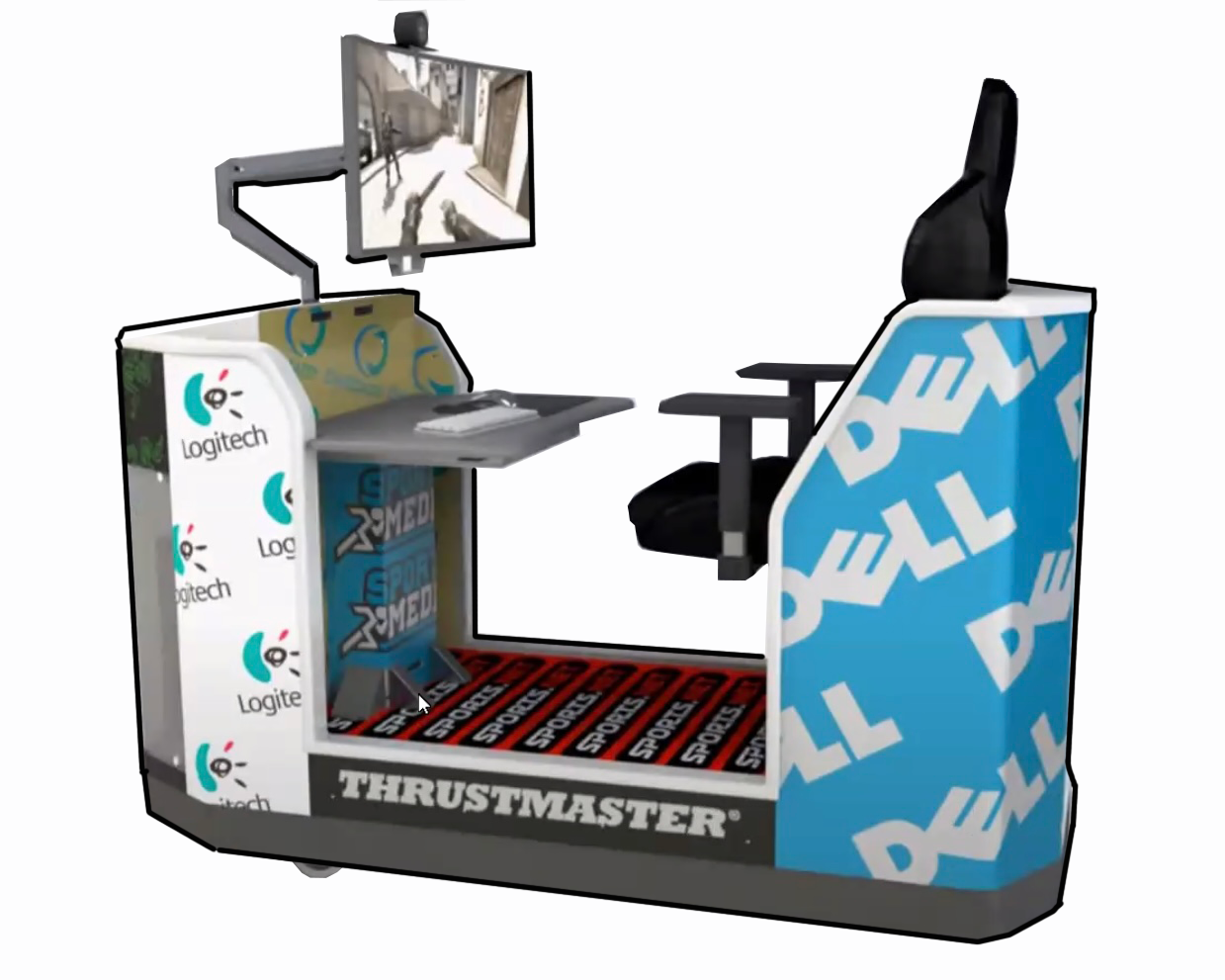
Furthermore, the data-driven nature of modern marketing allows us to track the success of these installations in real-time. Using performance intelligence dashboards, partners can see exactly how many impressions they are generating and how those impressions translate into engagement.
4. Designing for Discoverability and AI
One of the most overlooked aspects of brand partnerships is "Digital Equity." In 2026, if a collaboration does not leave a footprint on the web, it might as well not have happened. Search engines and AI-based answer engines look for relationships between brands to determine authority and relevance.
A well-executed partnership should include:
- Joint Content Creation: Develop white papers, blog posts, and videos that highlight the joint venture.
- Backlink Strategy: Ensure that both brands link to a central hub or press release, boosting the SEO authority of the project.
- Structured Data: Use metadata to tell search engines that Brand A and Brand B are working together on a specific initiative.
By building for discoverability, you ensure that the partnership continues to work for you long after the initial launch event has concluded. This builds long-term brand equity and ensures your company remains at the top of AI-generated summaries and search results.
5. Measurement and Iteration: Beyond the Vanity Metrics
While impressions and "likes" are great for the ego, they do not always move the needle on the bottom line. To truly succeed in cross-industry partnerships, you must measure deeper metrics.
Are you seeing an increase in new-to-file customers? Is there a measurable lift in the lifetime value of customers who engaged with the partnership? At Dakdan Worldwide, we use data-driven sports marketing valuation and attribution modeling to give our clients a clear picture of their ROI.

Once you have the data, use it to iterate. Not every partnership will be a home run, but every partnership provides valuable insights. Use these learnings to refine your approach, kill off the underperformers, and scale the winners into multi-year strategic pillars.
Conclusion: The Future is Collaborative
The road to success in 2026 is paved with collaboration. By stepping outside your industry silo and looking for partners who share your vision and values, you can unlock growth opportunities that were previously out of reach. Dakdan Worldwide is here to help you navigate this journey, from initial strategy to final execution.
Whether you are looking to enter the world of sports media, explore venue-specific advertising in zoos and aquariums, or lead the way in esports education, the right partnership is waiting for you. It is time to stop thinking about what you can do alone and start thinking about what we can achieve together.
#Motivation #Branding #Strategy #Marketing #AdvertisingAndMarketing #digitalmarketing #Innovation #Sports
Contact Information
For more information on strategic partnerships and media consulting, please contact:
Dan Kost, CEO
Dakdan Worldwide
Phone: +1 (970) 578-4652
Email: info@dakdan.com / Dan@dakdan.com
Website: www.dakdan.com
Stay Connected: