
Managing a sports advertising network is a lot like coaching a championship team. You have hundreds of moving parts, high-stakes deadlines, and a crowd that expects a flawless performance every single time. In this world, your media assets – the videos, graphics, sponsor loops, and live feeds – are your players. If you cannot find them, organize them, or deploy them at the right moment, you are leaving revenue on the table.
At Dakdan Worldwide, we see media asset management (MAM) not just as a technical storage solution, but as a strategic engine that drives growth. Whether you are managing LED boards in a professional stadium or a network of high school esports pods, mastering your media library is the first step toward building a dominant advertising presence.
What is Media Asset Management for Sports?
Media Asset Management is the combination of smart software and disciplined processes used to store, organize, and distribute media content. In the sports world, this includes everything from 30-second broadcast spots to the tiny "brought to you by" graphics that flash across a scoreboard during a replay.
For a modern sports advertising network, a MAM system acts as the "one source of truth." It ensures that the creative team, the sales department, and the game-day operators are all looking at the same approved version of a file. This eliminates the "last-minute panic" where someone is searching through a random hard drive for a sponsor's latest logo five minutes before kickoff.
Education Through Simulation: The Esports Pod Revolution
One of the most exciting frontiers in sports media management is the rise of esports in high schools. At Dakdan Worldwide, we focus on education through simulation. Our custom esports gaming pods are more than just furniture, they are integrated media hubs that provide a professional-grade experience for students while offering a unique advertising network for brands.
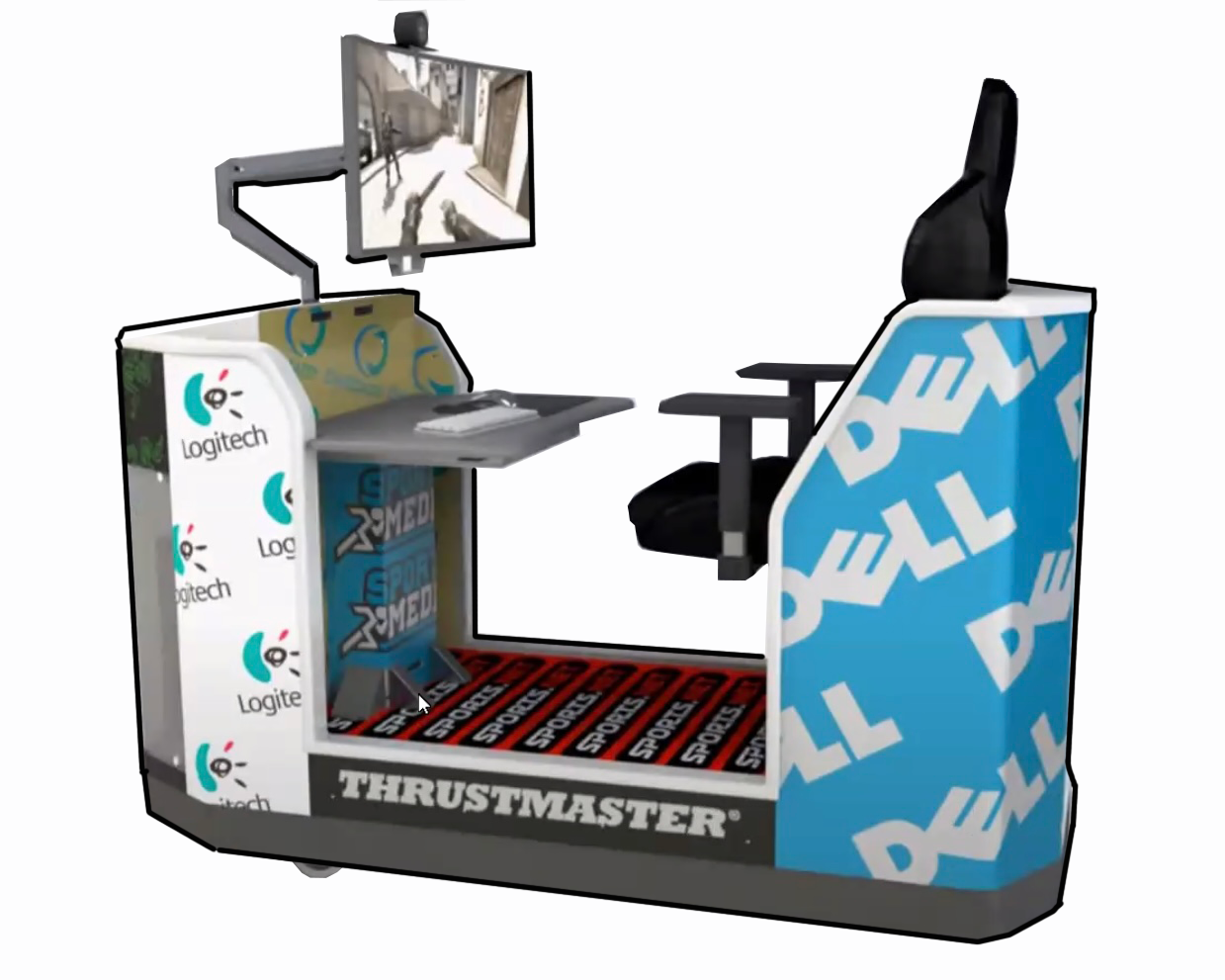
When you manage a network of these pods across multiple schools, your MAM system becomes vital. You are no longer just managing "gaming clips." You are managing educational content, tournament brackets, and high-value sponsorship assets from brands looking to connect with the next generation of digital talent. These pods represent a controlled environment where media assets can be deployed to drive both educational growth and brand awareness.
Building a Sports-Ready Metadata Model
The secret to a successful MAM system is not just where you store the files, but how you label them. This is known as metadata. Without good metadata, your asset library is just a digital junkyard. For a sports advertising network, your metadata should be granular and solution-oriented.
Key metadata fields should include:
- Sponsor/Brand Name: Which partner owns this content?
- Event/Game ID: Is this for a specific rivalry game or a season-long campaign?
- Flight Dates: When is this ad allowed to run?
- Rights and Permissions: Can this be used on social media, or is it strictly for in-venue display?
- Technical Specs: Is this formatted for a 3D signage display or a standard 16:9 monitor?
By tagging every asset correctly, you allow your team to find exactly what they need in seconds. If a sponsor calls and asks for a report on every time their logo appeared during the playoffs, a well-indexed MAM system can generate that answer instantly.

Strategic Storage: Online, Nearline, and Deep Archive
Not all media assets are created equal. You do not need the same level of access to a highlight reel from three years ago as you do for the starting lineup graphics for tonight's game. A strategic MAM setup uses tiered storage to save money and improve speed.
- Online Storage: This is for your "active roster." These are the files being used right now for current campaigns and upcoming games. They need to be accessible instantly.
- Nearline Storage: Think of this as your "bench." These are assets from the current or previous season that you might need to grab for a quick recap or a social media throwback, but they do not need to take up space on your fastest servers.
- Deep Archive: This is your "hall of fame." This is where you store everything for the long term. It is cost-effective and secure, ensuring that your network's history is preserved without cluttering your daily workflow.
Creating Value for Sponsors
A mastered media asset network is a massive selling point for sponsors. Brands are no longer satisfied with just "being on the screen." They want to know their content is being handled professionally and delivered to the right demographic at the peak moment of engagement.
When Dakdan Worldwide consults with brands looking to enter the high school sports or esports space, we emphasize the precision of our media delivery. Because we manage assets strategically, we can offer sponsors "dynamic integration." This might mean a specific graphic triggers only when a student hits a certain milestone in a simulation, or a brand's logo appearing on 3D signage during the most intense moment of a match.
This level of detail is only possible when your media assets are managed through a centralized, searchable system. It moves the conversation from "buying an ad" to "investing in a media experience."
Workflow Automation: From Intake to Playout
The goal of any MAM system is to reduce manual labor. Repetitive tasks like transcoding video into different formats or moving files from an editor's desk to the broadcast booth should be automated.
In a high-functioning sports network, the workflow looks like this:
- Ingestion: A sponsor uploads a new commercial. The MAM system automatically checks the file for quality and applies the necessary metadata.
- Approval: The sponsorship manager receives a notification to review the file. With one click, it is marked as "approved for playout."
- Distribution: The system automatically pushes the file to the correct venues, whether that is a stadium scoreboard or a network of esports pods in high school labs.
- Reporting: After the game, the system logs exactly how many times the file was played, providing transparent data for the sponsor.

Why Dakdan Worldwide is the Strategic Choice
At Dakdan Worldwide, we operate across the entire spectrum of media, entertainment, and sports. From our media holding operations to our data analytics division, we understand that data and media are two sides of the same coin.
We help our clients build networks that are not just large, but smart. By focusing on education through simulation and providing cutting-edge consulting, we ensure that every media asset in your network is working toward a specific goal. We do not just help you store your videos, we help you master your network to drive educational outcomes and maximize sponsorship revenue.
If you are ready to take your sports advertising network to the next level, it starts with a conversation about how you manage your most valuable digital property.

Connect With Us
Dakdan Worldwide is committed to providing evergreen, solution-oriented media and consulting services. Whether you are interested in our esports pods, our 3D signage solutions, or our comprehensive media management consulting, our team is ready to help you win.
Contact Information:
- Company Name: Dakdan Worldwide
- Owner: Dan Kost
- Email: info@dakdan.com
- Phone: +1 (970) 578-4652
- Website: dakdan.com
- Main Office: Colorado, USA
Follow Our Journey:
#SportsMarketing #MediaAssetManagement #EsportsEducation #DakdanWorldwide #SportsAdvertising #DigitalMedia #AdTech #HighSchoolEsports #StrategicMarketing #ColoradoBusiness