
Colorado, USA, Dakdan Worldwide, Media Holding | Consulting | Advertising | Entertainment | Sports
Primary keywords: digital signage marketing, venue ROI, digital signage strategy
Secondary keywords: interactive displays, sponsorship revenue, esports pods, high school esports, venue analytics, wayfinding signage
High-traffic venues win (and lose) on micro-moments, the line at concessions, the pause near the bar, the hallway outside restrooms, the pregame huddle, the halftime reset. Digital signage is one of the fastest ways to turn those moments into measurable revenue, with fewer operational headaches and better guest experience.
This press release is an evergreen playbook you can apply across sports facilities, theaters, museums, zoos and aquariums, esports lounges, school gyms, transit hubs, and mixed-use entertainment districts. The goal is simple: increase per-cap spend, sell more sponsorship inventory, and keep your messaging accurate in real time.
Below are five practical tips that work even better when you combine them into one unified signage strategy.
Tip 1) Place screens where decisions happen, not where it is convenient
Digital signage only prints money when it is seen, and more importantly, seen at the exact moment someone can act.
Start with a “decision map,” not a floorplan. Walk your venue and list the top places guests make a choice:
- “What do we do next?” (entries, concourses, main corridors)
- “What do we buy?” (bars, concessions, merch)
- “Where do we go?” (wayfinding junctions, elevator lobbies, restroom corridors)
- “Do we stay?” (seating bowl edges, waiting areas, queue lines)
High-impact placements that consistently perform:
- Entrances and ticketing zones: set expectations, upsell bundles, announce add-ons.
- Queue lines: convert dead time into purchases, upgrades, QR actions.
- Bars and concessions: dynamic menus, promos, fast-moving items, sponsor integrations.
- Near seating transitions: last-call messaging, merchandise reminders, post-event offers.
A simple placement rule that protects flow: keep major entry points clear, and use bigger displays slightly inside the space to pull guests deeper (where they tend to spend more). If a screen blocks traffic, you lose both attention and goodwill.
Simulation exercise (use this with any venue team):
- Pick one guest persona (family, student, superfan, commuter).
- Trace their path from entry to exit.
- Identify 10 “pause points” where they stop or slow down.
- Assign each pause point one action: buy, upgrade, move, share, or learn.
- Design signage content to match that action.
This is how you stop treating signage like decor and start treating it like a revenue system.
Tip 2) Replace printing with live promos that match the clock and the crowd
Static posters are always late. Digital signage is immediate.
When you remove printing from your promotional workflow, you unlock a compounding ROI:
- Zero reprint cost
- Faster updates
- Less staff confusion
- More consistent branding
- More accurate pricing and inventory messaging
What “real-time” should mean in a venue:
- Menus that change by time block (pre-event, peak, post-event)
- Instant item swaps (sold out, slow mover, sponsor push)
- Price and bundle updates (combo pricing, family packs, student deals)
- Short “flash promos” triggered by foot traffic spikes
A practical content schedule you can copy:
- Arrival window: wayfinding + “what’s happening here” + early bird bundles
- Peak window: best sellers + fast service items + 1-click upsell
- Intermission/halftime: line management messaging + pre-order instructions + sponsor spot
- Departure: merch reminders + “next event” promo + post-visit offer
Operational advantage: staff stops answering the same questions. A great screen in the right place can reduce repetitive “where is…” and “what’s the price…” conversations, which frees your team to focus on hospitality and speed.
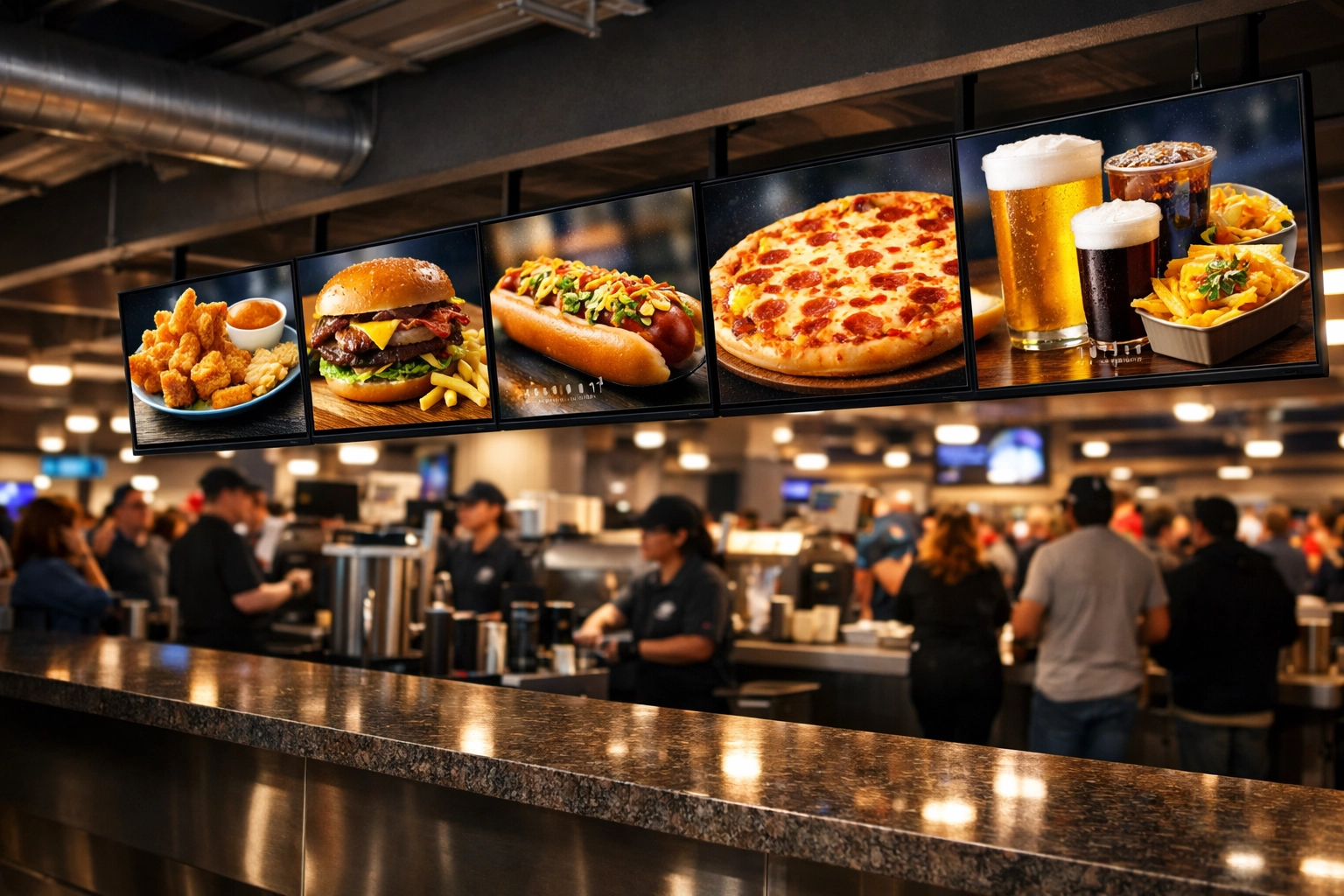
Suggested image prompt: A clean, professional photo of a modern concession area with a digital menu board (no text overlays), showing multiple screens above the counter.
Tip 3) Mix promotions with entertainment, community, and social proof
If every screen is “buy now,” people tune out. The best venue signage behaves like programming.
Build a 3-lane content mix:
- Revenue lane (30 to 50%): menus, bundles, upsells, premium seating, merch.
- Experience lane (30 to 50%): live feeds, highlights, schedules, trivia, local stories.
- Community lane (10 to 20%): sponsor thank-yous, school features, fan moments, partner spotlights.
This mix keeps attention high, which makes your promotional moments more effective.
High-performing content formats:
- Short highlight loops (silent-friendly)
- “Did you know?” venue facts (good for museums, zoos, aquariums)
- Crowd prompts (polls, trivia, quick challenges)
- User-generated content callouts (hashtag prompts, photo moments)
Pro move for youth and student venues: feature student achievements on screens. It elevates pride, drives return visits, and makes sponsors feel good about attaching their brand to education.
Use a consistent community prompt like #askdakdan to invite questions, feature quick tips, and encourage shareable moments that extend beyond the building.
![#askdakdan]

Trending/high-profile hashtags to pair with your content calendar:
#DigitalSignage #SportsBusiness #VenueMarketing #Esports #STEM #HighSchoolEsports #BrandPartnerships #FanEngagement #Advertising
Tip 4) Turn interactivity into a dual revenue stream (and a better guest experience)
Interactive displays do two things at once:
- Reduce friction for guests (they find what they need faster)
- Create premium sponsor inventory (brands pay more for useful placements)
Think beyond “touchscreen kiosk.” Interactivity can be:
- Wayfinding stations with sponsor panels
- Self-service event info + upsell prompts
- QR-driven ordering prompts
- “Choose your content” micro-menus (highlights, schedules, sponsor offers)
Where interactivity works best:
- Large concourse intersections
- Outside restrooms and elevators
- Merch areas (size guides, featured collections, bundles)
- Lobby areas for theaters and entertainment venues
Dual revenue stream model (simple and effective):
- Left side: wayfinding, schedules, guest info
- Right side: rotating sponsor ads, featured offers, partner content
Your guests get utility. Your venue gets recurring media inventory that is easy to sell because it is measurable and placement-driven.
Education-forward innovation: esports pods in high schools (and sponsor-ready signage)
One of the fastest-growing venue concepts is high school esports because it combines competition, community, and career pathways (STEM, media production, event ops, and marketing). When you pair esports with digital signage, you create a modern mini-arena experience that is sponsor-friendly and educational.
A pod-based setup also creates clean, consistent brand surfaces for partners who want to reach students in a positive environment.
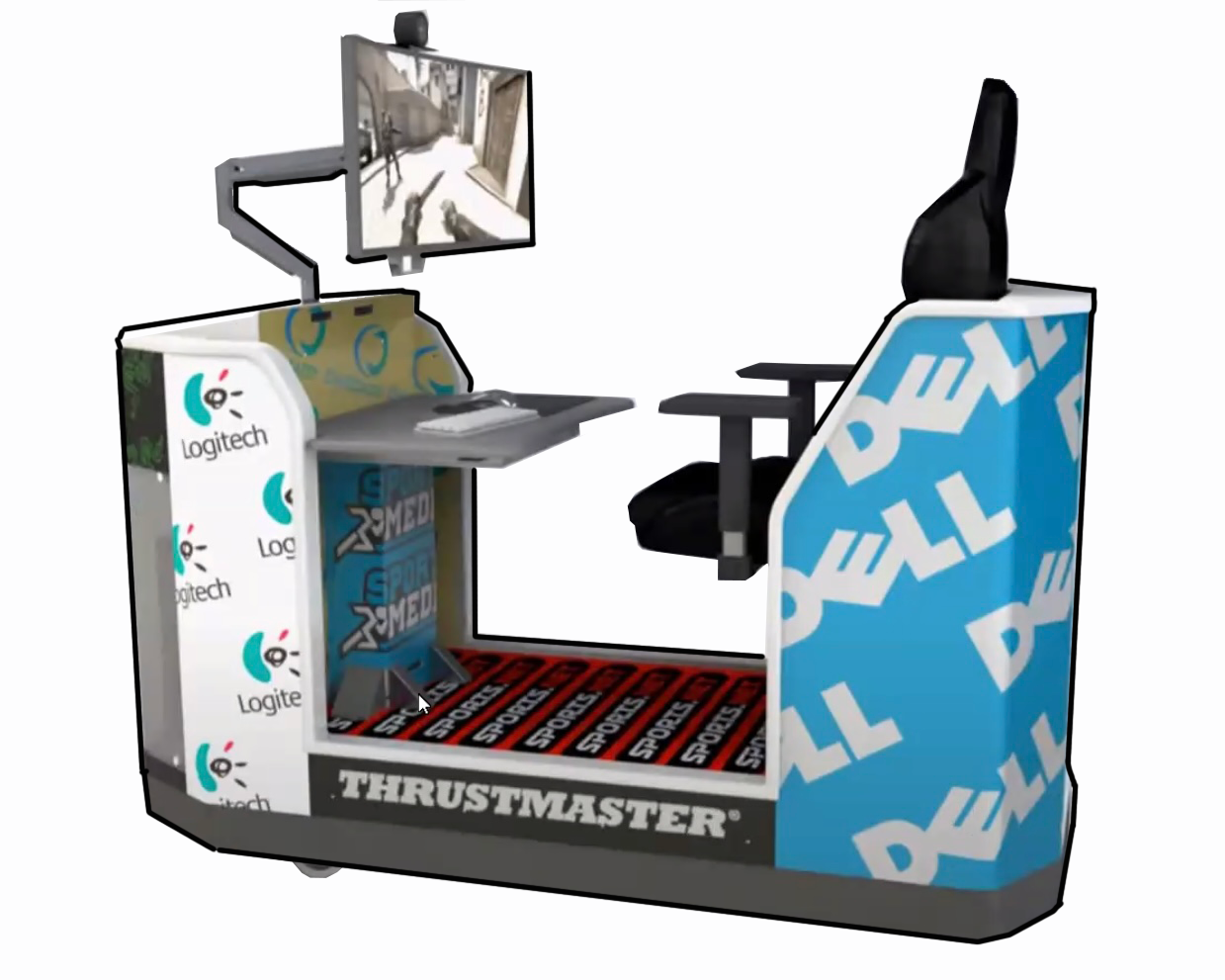
How venues and schools can simulate an esports event night with signage:
- “Now playing” tournament bracket screen
- Sponsor loop between matches
- Student spotlight (shoutouts, club recruitment)
- Live stream QR code and schedule
- Concession-style menu screen if the school sells snacks or merch
Why sponsors like it: it is localized, values-driven, and measurable. Brands can sponsor:
- The pod area
- The weekly match screen loop
- The bracket screen
- A “player of the match” segment
- A scholarship or equipment fund callout
This is where signage becomes more than marketing. It becomes infrastructure for education and community growth.
Tip 5) Use analytics and timing to make every screen earn its space
The biggest ROI unlock is not “more screens.” It is smarter rotations.
Modern digital signage programs can be managed like a media network:
- Content playlists by zone
- Daypart scheduling (time-based automation)
- Campaign reporting (what ran, when, where)
- A/B testing (two offers, same placement, compare outcomes)
What to measure (keep it simple):
- Sales lift during promo windows (concessions, merch, upgrades)
- Redemption actions (QR scans, short URLs, “show this screen” offers)
- Sponsor delivery (impressions by location and time block)
- Operational metrics (shorter lines, fewer repeated questions)
Timing strategy that works across venue types:
- Run shorter, more frequent promos during peaks
- Run longer, more informative content during lulls
- Place your best revenue offer closest to purchase points
- Reserve “big brand moments” for the highest density windows
Simulation exercise (30 minutes, repeat monthly):
- Pick one zone (bar, merch, lobby, concourse).
- Identify the top two actions you want (example: combo purchase + sponsor QR scan).
- Build two versions of the same offer (different headline, different product image).
- Rotate for equal time blocks.
- Compare results, then lock the winner into the standard playlist.
Over time, your signage becomes a performance channel, not just a screen that “looks nice.”
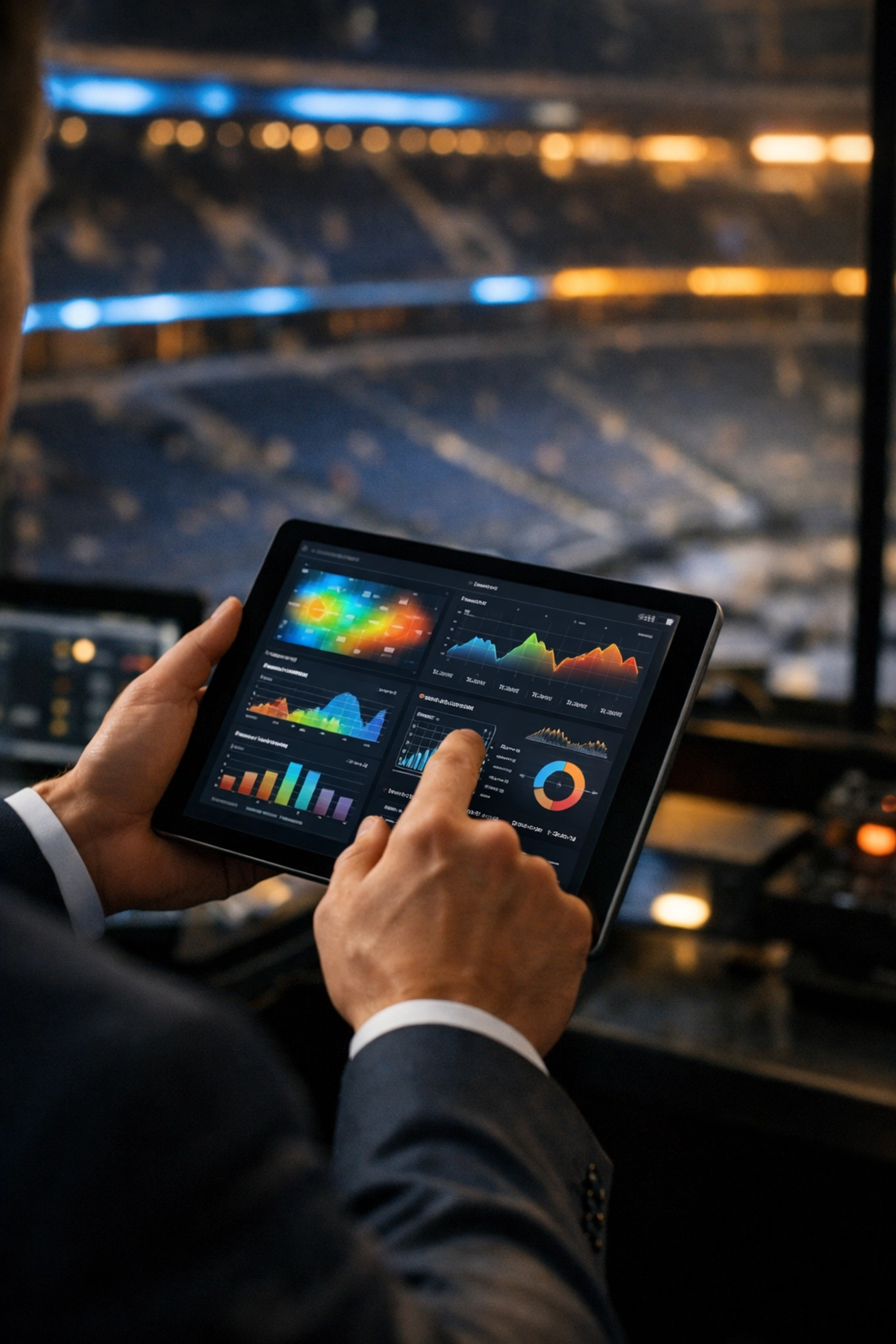
Suggested image prompt: A professional photo of a venue operations manager reviewing a digital signage dashboard on a laptop or tablet (no visible sensitive data, no text overlays).
A ready-to-run “5 screen playlist” you can deploy in one afternoon
If you want a fast start, deploy this across five screens in high-traffic areas:
- Welcome + next steps (entry): “Where to go” + featured experience
- Top 3 offers (concessions): best sellers + bundle + sponsor feature
- Wayfinding + sponsor (concourse): map-style navigation + rotating partner panel
- Community loop (lobby): highlights, fan moments, student features, local partner thanks
- Upsell loop (near seating/exit): merch reminder + premium upgrade + next event teaser
This creates a balanced system: guidance, entertainment, revenue, and sponsor inventory.
How Dakdan Worldwide helps venues build signage programs that scale
Dakdan Worldwide supports organizations that want to treat digital signage like a strategic media asset, not a one-time hardware purchase. That includes:
- Venue marketing strategy and content planning
- Sponsorship packaging that aligns with education and community outcomes
- Cross-division support across sports, entertainment, esports, and transportation environments
- Data-informed optimization through analytics and reporting
Explore our divisions and capabilities: https://dakdan.com/divisions
Learn more about Dakdan Worldwide: https://dakdan.com/about
Call to action (CTA)
If you want a signage plan that increases revenue per guest, strengthens sponsor value, and modernizes the venue experience (including esports pod installs for high schools), we will help you map placements, build playlists, and create a sponsor-ready media kit.
- Website: https://dakdan.com
- Press + updates: https://press.dakdan.com
- Short code: DAKDAN-ROI
- Contact: info@dakdan.com
- Phone: +1 (970) 578-4652
- Contact page: https://dakdan.com/contact
Follow Dakdan Worldwide: