
Large-scale creative productions fail 70% of the time – not because of budget constraints or lack of talent, but because teams skip the framework and jump straight into execution mode. Stadium events, television productions, and brand activations require precision at every stage, and when one phase breaks down, the entire project collapses.
The difference between campaigns that convert and those that simply look impressive comes down to treating creative production as a strategic business function rather than an artistic exercise. This six-phase framework transforms how organizations approach high-stakes creative projects.
Phase 1: Strategic Ideation and Stakeholder Alignment
Before allocating a single dollar or contacting any vendors, your team must answer three non-negotiable questions.
What problem are we solving? Every production must address a measurable business objective. "Creating something cool" isn't a strategy. Building brand awareness among 18-34 year olds, driving season ticket renewals, or activating a multi-million dollar sponsorship – these are objectives your creative concept must directly support.
Who owns what? Define roles with surgical precision. Who makes creative decisions when the director wants to exceed budget? Who approves vendor contracts? Who manages last-minute changes 48 hours before go-live? Ambiguity in decision-making authority destroys momentum and creates expensive delays.
How do we maintain visibility? For productions spanning multiple locations or simultaneous activations, centralized project management systems provide real-time visibility across all workstreams. Transparency prevents surprises, and surprises in creative production typically cost six figures to resolve.
Phase 2: Pre-Production Planning and Resource Allocation
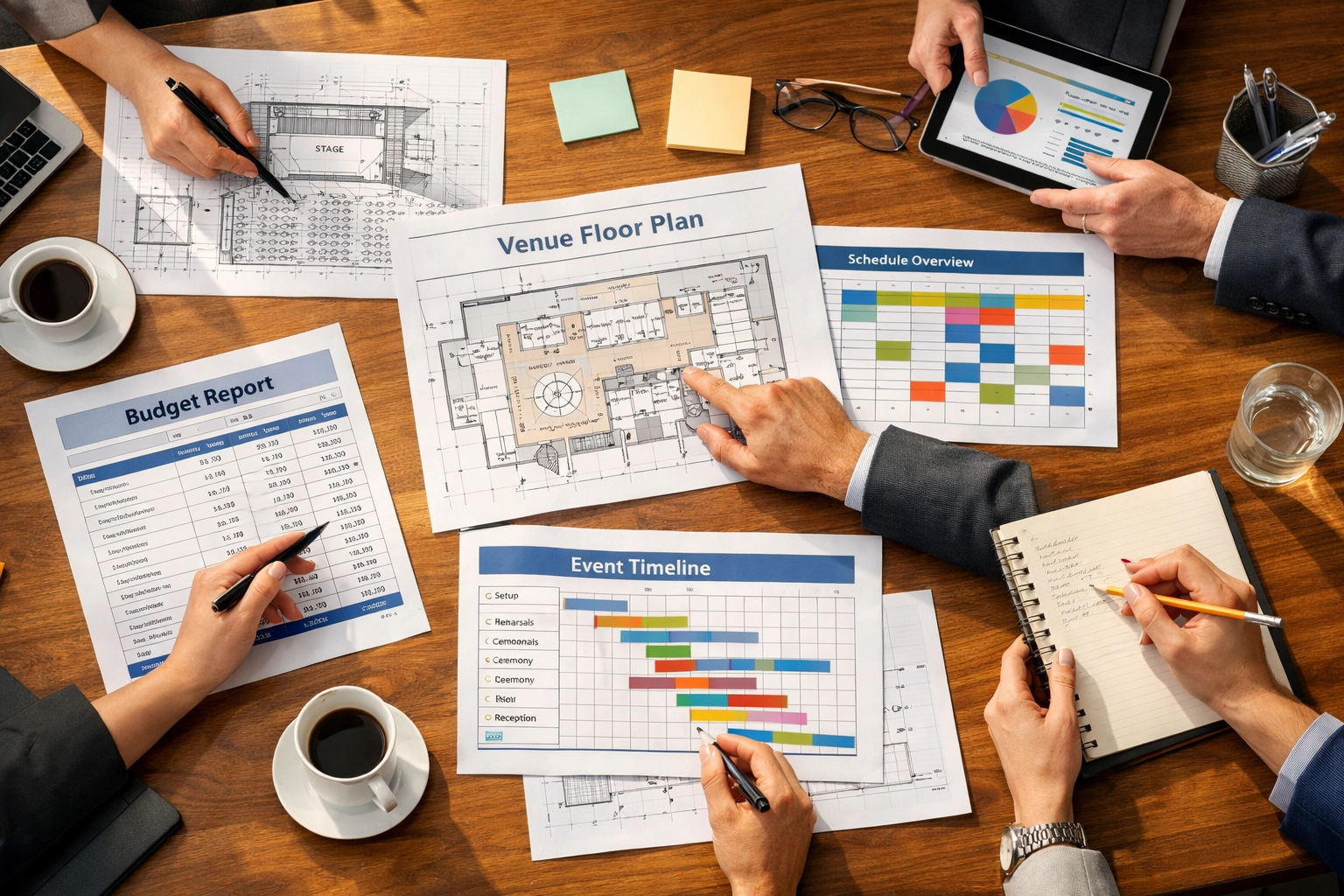
Once strategic alignment exists, pre-production becomes a mathematical exercise in resource optimization. This phase separates professional operations from amateur attempts.
Budget architecture goes beyond simple line items. Break costs into fixed expenses (venue rental, equipment, core crew) and variable expenses (talent, overtime, contingencies). Allocate 15-20% for unforeseen circumstances – weather delays, equipment failures, and last-minute creative changes always happen.
Timeline mapping requires working backward from the event date. Permit applications, sponsor approvals, talent bookings, technical rehearsals – each has a critical path. Miss one deadline early in the process, and every subsequent phase compresses dangerously.
Vendor qualification determines production quality more than most realize. Evaluate vendors on three criteria: technical capability, crisis management experience, and reference quality from similar-scale projects. The cheapest bid often becomes the most expensive mistake.
Phase 3: Creative Development and Concept Testing
Creative concepts must survive contact with reality. This phase stress-tests ideas before significant resources get committed.
Prototype and iterate using small-scale tests. If your stadium activation involves interactive displays, test the user experience with focus groups first. If your TV show concept relies on specific audience reactions, run controlled pilots. Adjust based on data, not opinions.
Technical feasibility reviews involve site visits and infrastructure assessments. Can the venue's power grid handle your lighting requirements? Do broadcast trucks have adequate access? Will weather conditions impact outdoor setups? These aren't creative questions – they're engineering requirements that determine if your creative vision is physically possible.
Stakeholder presentation at this stage requires showing, not telling. Mock-ups, storyboards, sizzle reels – visual proof-of-concept materials get approvals faster than written descriptions. Decision-makers need to see the vision, not imagine it.

Phase 4: Production Execution and Quality Control
Execution separates theoretical plans from actual results. This phase demands obsessive attention to detail and real-time problem solving.
Daily production meetings at the start of each day align every department on objectives, potential issues, and contingency plans. These meetings take 15 minutes but prevent hours of confusion and duplicated work.
Quality checkpoints occur at predetermined intervals, not just at project completion. Review footage every four hours during multi-day shoots. Test audio systems three times before doors open. Inspect brand placements from multiple angles before audiences arrive. Catching problems early costs hundreds; catching them late costs hundreds of thousands.
Communication protocols establish how information flows during crises. Who calls the client when problems emerge? What threshold of issues requires escalation? How quickly can decisions get made? Clear protocols prevent the chaos that derails productions.
Phase 5: Activation and Audience Engagement
The event itself represents only a fraction of total value. Activation extends before, during, and after the main production.
Pre-event engagement builds anticipation through social media teasers, behind-the-scenes content, and influencer partnerships. Start this content campaign 30 days before go-live to maximize reach.
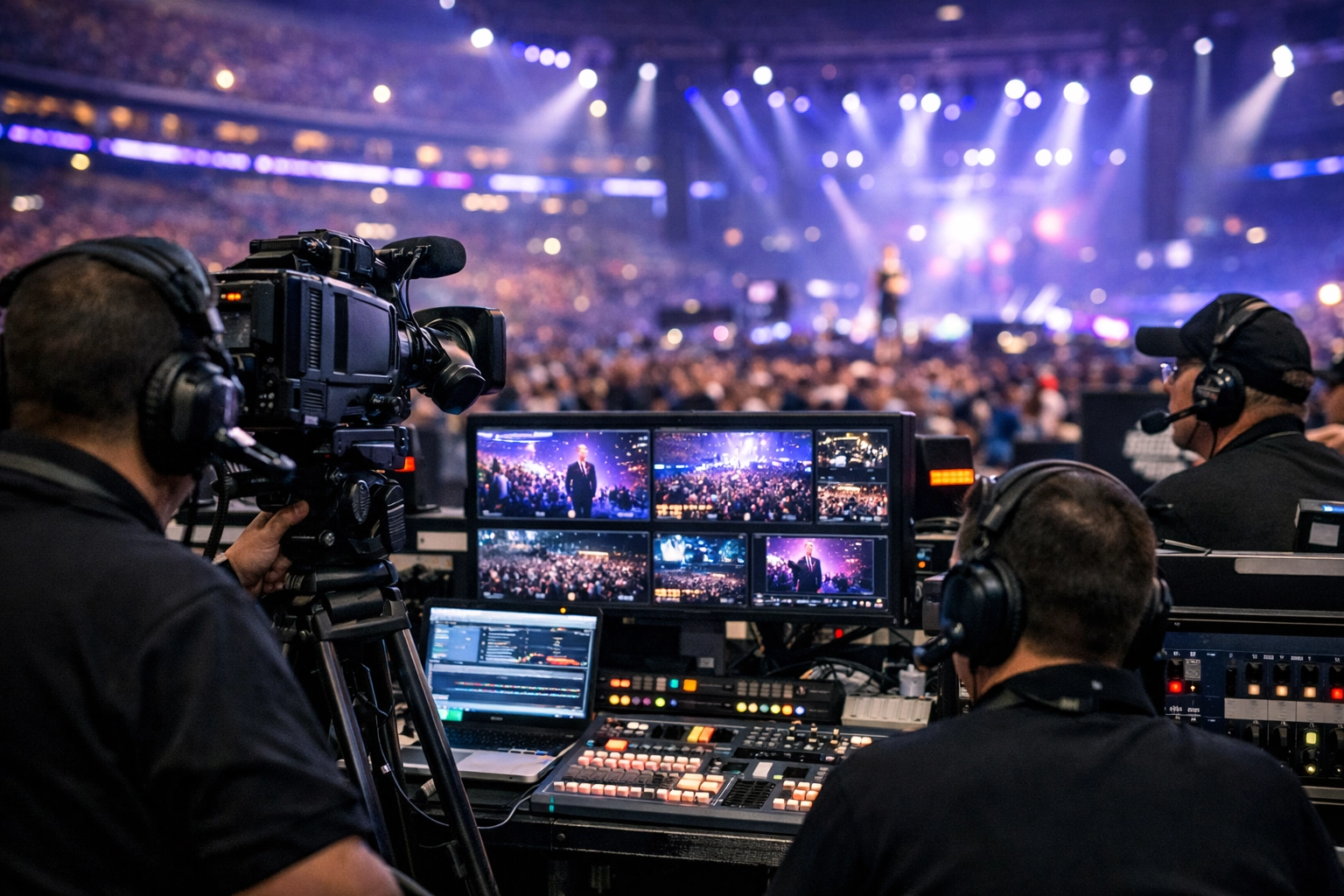
Live amplification captures and shares real-time moments across digital channels. Dedicated social media teams document key moments, create shareable clips, and respond to audience reactions as they happen. This transforms a single-location event into a distributed digital experience.
Post-event content strategy extracts maximum value from production assets. One stadium activation generates weeks of content – highlight reels, attendee testimonials, sponsor showcases, and educational breakdowns of production techniques.
Phase 6: Post-Event Analysis and Optimization
Measuring outcomes transforms one-time events into repeatable, improvable systems.
Performance metrics must align with Phase 1 objectives. If the goal was brand awareness, track social media reach, earned media value, and share of voice. If the goal was sales activation, measure conversion rates and customer acquisition costs. Vanity metrics like "impressions" mean nothing without business context.
Stakeholder debriefs within 72 hours of project completion capture fresh insights. What worked? What failed? What would we change? Document these lessons immediately – memory fades quickly, and valuable learnings disappear.
Asset cataloging creates a library of reusable components. Contracts, vendor relationships, technical specifications, creative templates – these become starting points for future projects, reducing planning time by 40-60% on subsequent productions.
Why This Framework Converts
Productions that follow this framework convert audiences into customers, fans, and advocates because every phase connects to business outcomes. The creative serves the strategy, not the other way around.
Organizations that master this approach don't just execute events – they build competitive advantages through repeatable excellence. Each production becomes a data point that improves the next one.
Whether you're planning a stadium activation, producing broadcast content, or executing multi-location brand experiences, this framework provides the structure that turns creative vision into measurable business results.
Partner With Proven Creative Production Experts
Dakdan Worldwide specializes in executing high-stakes creative productions across sports, entertainment, and advertising. Our team brings decades of experience in stadium events, broadcast production, and brand activations that deliver measurable ROI.
Ready to discuss your next production? Contact Dan Kost directly at info@dakdan.com or call +1 (970) 578-4652. Visit dakdan.com to explore our portfolio and discover how strategic creative production transforms brand experiences into business outcomes.
Connect with us: LinkedIn | Twitter | Instagram | Facebook
#CreativeProduction #EventMarketing #BrandActivation #StadiumEvents #SportsMarketing #MediaProduction #ConsultingServices #AskDakdan