
Most media companies pick a lane and stay there. Sports agencies stick to stadiums. Entertainment firms focus on content. Tech consultancies handle digital infrastructure. But what if the real competitive advantage isn't specialization – it's strategic integration across industries?
That's the thinking behind Dakdan Worldwide's multi-industry media framework. Operating from Colorado with a portfolio of over 20 companies, Dakdan has built something different: a unified strategic hub that delivers media, consulting, and advertising solutions across sectors that traditionally never talk to each other.
Why Multi-Industry Integration Wins
Here's the challenge most brands face: they work with different agencies for different needs. One vendor handles their sports sponsorships. Another manages their entertainment partnerships. A third tackles their out-of-home advertising. Each operates in a silo, using different metrics, different strategies, and different measurement frameworks.
The result? Disconnected campaigns, duplicated efforts, and budgets that don't scale efficiently across channels.
Dakdan's framework flips this model. By operating across multiple industries from one strategic hub, the company creates cross-sector insights that single-industry agencies simply can't access. When you're simultaneously running stadium networks, transportation advertising, entertainment production, and digital infrastructure projects, you start seeing patterns others miss.

The Strategic Architecture Behind Cross-Industry Media
The framework operates on a foundational principle: core media strategies remain consistent even when applications change. Whether you're activating a sponsorship at a Major League venue, launching a campaign on transit networks, or integrating brand messaging into esports education pods, the underlying strategic elements stay the same.
This approach allows Dakdan to move solutions across industries without rebuilding from scratch. A digital signage strategy developed for sports venues can adapt to airports. Audience engagement tactics proven in entertainment settings translate to educational environments. First-party data collection methods refined in one sector improve performance in another.
The portfolio structure includes distinct operational divisions that each bring specialized capabilities while connecting through shared strategic infrastructure:
Sports and Entertainment Media: Through properties like Sportrons and Dakdan Entertainment, the company handles everything from implied sponsorship strategies in stadiums to content production for broadcast and streaming platforms. This division understands how audience attention works in high-energy, time-sensitive environments.
Transportation and Out-of-Home Networks: Mobile Highway Advertising brings brand messaging to trucking fleets, creating moving billboards that reach audiences across geographic markets. This complements traditional venue-based approaches with mobility and extended reach.
Digital Infrastructure and Smart City Solutions: RAMM provides Wi-Fi, charging stations, and public service technology that turns everyday touchpoints into media opportunities. This infrastructure approach creates sponsored convenience that audiences actually appreciate rather than tolerate.
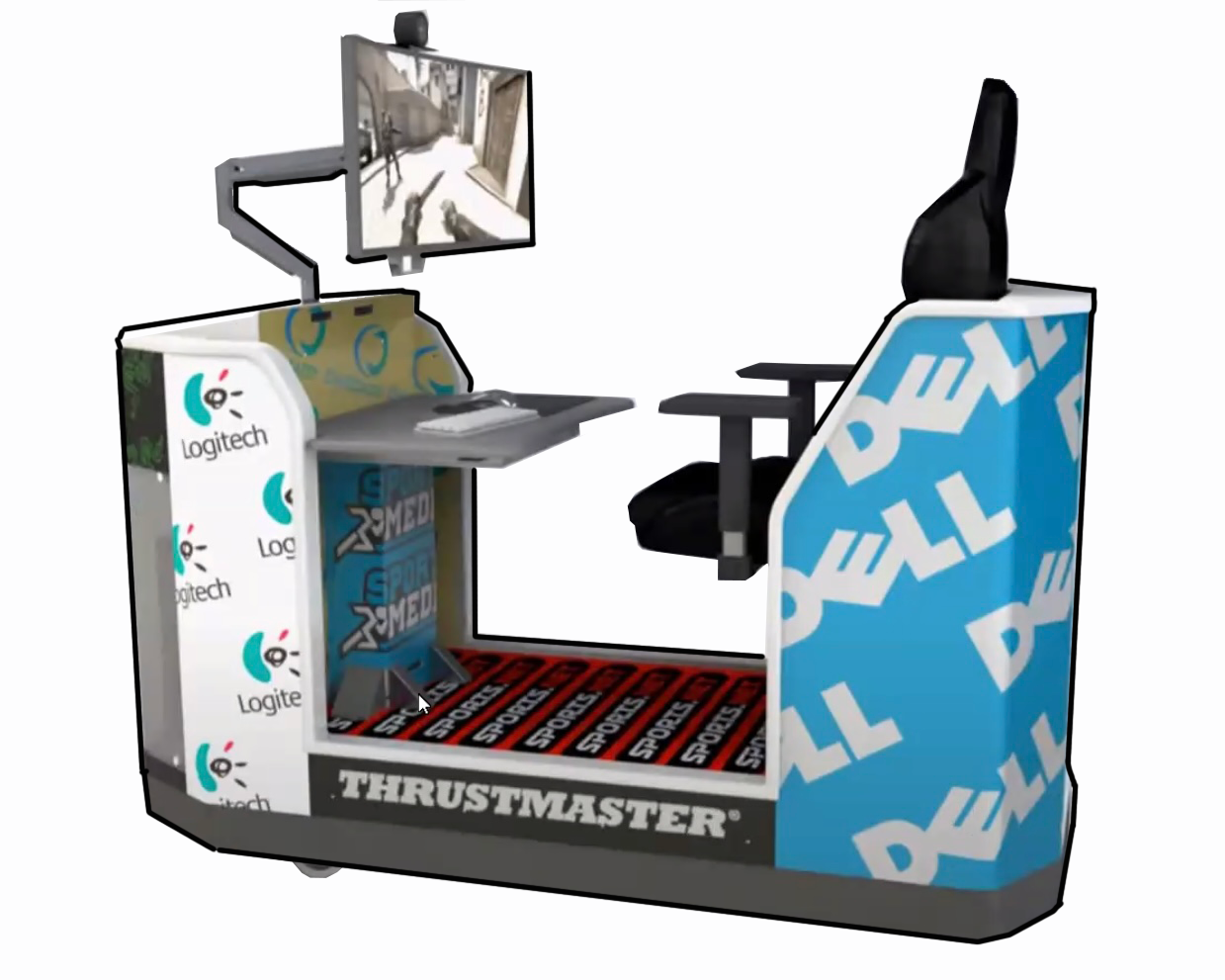
Education and Esports Integration: Custom esports gaming pods deliver brand exposure while supporting education through simulation. High schools gain access to competitive gaming setups, sponsors connect with student audiences, and educational outcomes improve through engaging technology.
How the Framework Works in Practice
The real power shows up when clients engage multiple divisions simultaneously. A brand that wants to reach younger demographics might start with a traditional sports sponsorship conversation. Within the Dakdan framework, that conversation naturally expands: what about esports pods in schools where those fans are actually spending their weekdays? Could mobile advertising extend the message beyond venue walls? Does the brand's story fit entertainment content opportunities?
This integrated thinking happens organically because the strategic planning occurs in one place rather than across disconnected agencies that have no reason to collaborate.
The framework also enables what Dakdan calls "solution stacking" – layering complementary media approaches that amplify each other. A campaign might combine in-venue digital displays with mobile highway placements and entertainment integration, all measured through unified analytics that show true cross-channel attribution.

Sector Applications: Where the Framework Delivers Results
While the strategic approach remains consistent, applications adapt to sector-specific needs:
Professional Sports: Brands gain access to stadium digital networks, implied sponsorship strategies that bypass traditional fee structures, and measurement systems that prove activation ROI beyond logo placement.
Entertainment and Media: Production capabilities meet distribution strategy, creating content that serves both creative and commercial objectives while building owned media assets.
Transportation and Mobility: Fleet advertising transforms logistics into media inventory, reaching commuters and travelers with messages that move through markets rather than staying static.
Education and Youth Sports: Esports pods and gaming setups bring brand messaging into schools and recreational facilities where younger audiences engage daily, creating sponsored learning environments that benefit all stakeholders.
Public Spaces and Events: Smart city infrastructure turns utilitarian services like phone charging and Wi-Fi into sponsored experiences, generating brand appreciation rather than ad resistance.
Retail and Consumer Goods: Programmatic DOOH capabilities bring real-time optimization to physical world advertising, connecting digital media thinking with real-world placements.
The framework scales across these sectors without requiring separate strategic planning for each. Core principles around audience attention, message frequency, creative adaptation, and measurement consistency apply regardless of the specific environment.
The Strategic Advantage of Unified Intelligence
Operating across industries creates a compound learning effect. Insights from sports sponsorship measurement improve entertainment integration strategies. Digital infrastructure performance data enhances out-of-home placement decisions. Education sector engagement metrics inform youth-focused campaigns in other channels.
This cross-pollination of intelligence means strategies continuously improve based on broader data sets than any single-sector agency could access. A tactic that drives engagement in stadiums gets tested in transit environments. If it works, it becomes part of the playbook. If not, the framework adapts before resources scale to that approach.

The unified measurement infrastructure also solves attribution challenges that plague multi-channel campaigns. When the same team oversees sports activations, mobile advertising, and entertainment placements, tracking audience journeys across touchpoints becomes feasible rather than theoretical.
Building for Brands That Think Beyond Categories
The companies seeing the most value from this framework share common characteristics. They recognize that their audiences don't segment their lives by industry the way marketing organizations segment their budgets. People move from sports venues to transportation networks to entertainment experiences to educational environments, often in the same day.
Brands that want to maintain presence across these environments need either multiple agency relationships – with all the coordination challenges that creates – or a partner whose operational structure already connects these sectors.
Dakdan's framework provides the latter option. One strategic planning process. One measurement system. One point of accountability. Multiple industries, multiple touchpoints, unified approach.
Moving Forward with Multi-Sector Strategy
The media landscape continues fragmenting into specialized channels and platforms. That fragmentation creates complexity for brands trying to maintain consistent presence and messaging across environments where their audiences actually spend time.
Strategic frameworks that operate across industries rather than within them turn that complexity into competitive advantage. Instead of coordinating multiple specialists, brands work with integrated capabilities that naturally connect sports media with entertainment properties, transportation networks with educational environments, and digital infrastructure with content production.
The result is media strategy that matches how audiences actually move through their days rather than how agencies traditionally organize their service offerings.
Ready to Explore Cross-Industry Media Solutions?
Whether you're looking to activate sports sponsorships, extend brand presence across transportation networks, integrate messaging into entertainment content, or reach student audiences through education technology, Dakdan Worldwide's multi-industry framework delivers strategic solutions from one hub.
Based in Colorado and operating nationwide, our portfolio of 20+ companies provides capabilities across media sectors with unified strategic planning and measurement.
Get in touch to discuss your multi-industry media opportunities:
- Website: dakdan.com
- Email: info@dakdan.com
- Phone: +1 (970) 578-4652
- Learn more about our approach: dakdan.com/about
Connect with Dakdan Worldwide and discover how strategic integration across industries creates media solutions that single-sector approaches can't match.