
Most organizations approach media strategy with tunnel vision, hiring specialists who only understand their specific industry. A sports venue brings in sports marketing experts. An entertainment property consults with entertainment media professionals. A transportation network works with transit advertising agencies. The problem? This siloed approach leaves massive opportunities on the table.
Great ideas don't respect industry boundaries. The digital engagement strategy that transforms a hockey arena's revenue can revolutionize how an aquarium connects with visitors. The data collection methods that help concert venues understand their audiences can fundamentally change how sports teams build fan relationships. When you limit yourself to single-industry thinking, you miss the cross-sector innovations that create competitive advantages.
Dakdan Worldwide operates differently. Our multi-sector media framework applies proven strategies from sports, entertainment, and transportation simultaneously, creating solutions that single-industry specialists simply can't see. Here's how this approach transforms organizations across different sectors.
The Foundation: Cross-Pollination Creates Competitive Advantage
Traditional consulting follows a predictable pattern. Agencies develop expertise in one vertical, package that knowledge into standardized offerings, and deploy the same playbook repeatedly. This creates incremental improvements at best.
Our framework starts with a different premise: breakthrough results come from connecting insights across industries. When you understand how professional sports teams monetize digital touchpoints, how entertainment properties create immersive brand experiences, and how transportation networks optimize high-traffic environments, you can engineer solutions that competitors in any single sector can't replicate.
This isn't theoretical. We've seen digital signage strategies developed for hockey fans drive engagement at family attractions. Sponsorship activation methods refined in entertainment venues unlock revenue streams at transportation hubs. Content personalization techniques from sports broadcasting enhance visitor experiences at cultural institutions.
The key is having teams that actually work across these sectors, not consultants who claim multi-industry expertise but really just recycle the same ideas with different terminology.

Transforming Sports Venues Into Strategic Media Platforms
Most sports organizations treat their venues as physical spaces with some screens. That's like treating a smartphone as just a phone. The opportunity is exponentially larger.
Our framework converts every venue touchpoint into a strategic media opportunity. Rather than static signage showing the same sponsor logos regardless of context, we implement dynamic systems that deliver contextually relevant content based on game situations, time of day, audience demographics, and real-time events.
Pre-game becomes a distinct programming block with wayfinding, hype content, and anticipation-building messaging. Halftime transforms into an activation window for food delivery sponsors offering venue-exclusive deals. Post-game shifts to highlight reels, player interviews, and next-game promotions. Each period serves different audience needs while creating authentic brand integration opportunities.
This approach typically delivers 40-85% increases in sponsorship and advertising revenue within the first implementation cycle. More importantly, it creates sustainable competitive advantages through premium partnerships that competitors can't easily replicate.
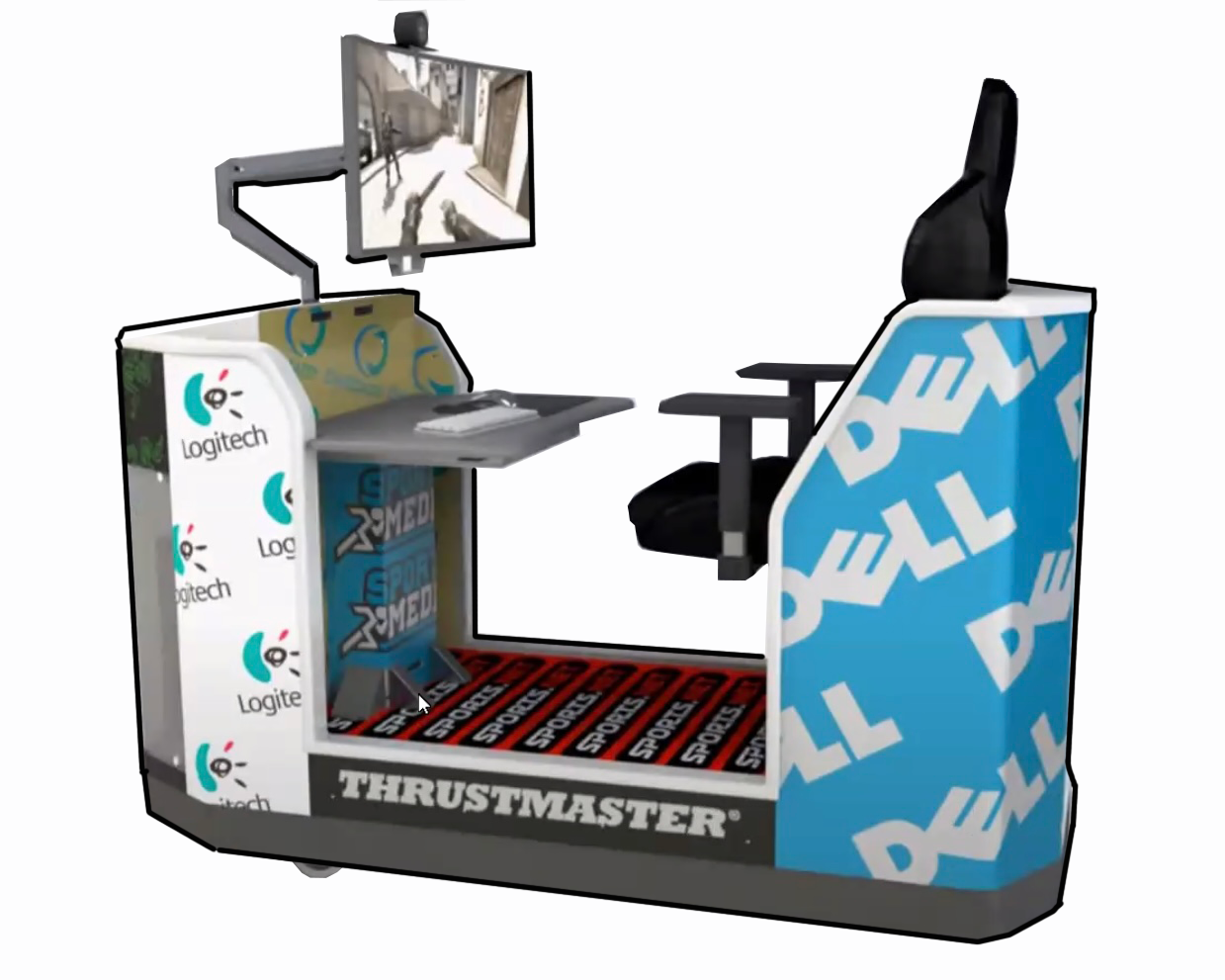
The same principles apply beyond traditional sports. Esports environments, fitness facilities, and recreational complexes all benefit from treating physical spaces as sophisticated media platforms rather than buildings with some screens mounted on walls.
Entertainment Properties: Enhancement Over Interruption
Entertainment venues face a unique challenge. Audiences come for an experience, and heavy-handed advertising destroys that experience. Yet these properties need revenue beyond ticket sales to remain viable.
The multi-sector framework solves this through what we call "value-first media integration." Instead of interrupting the entertainment experience with advertising, we identify opportunities where media enhances the experience while creating sponsorship value.
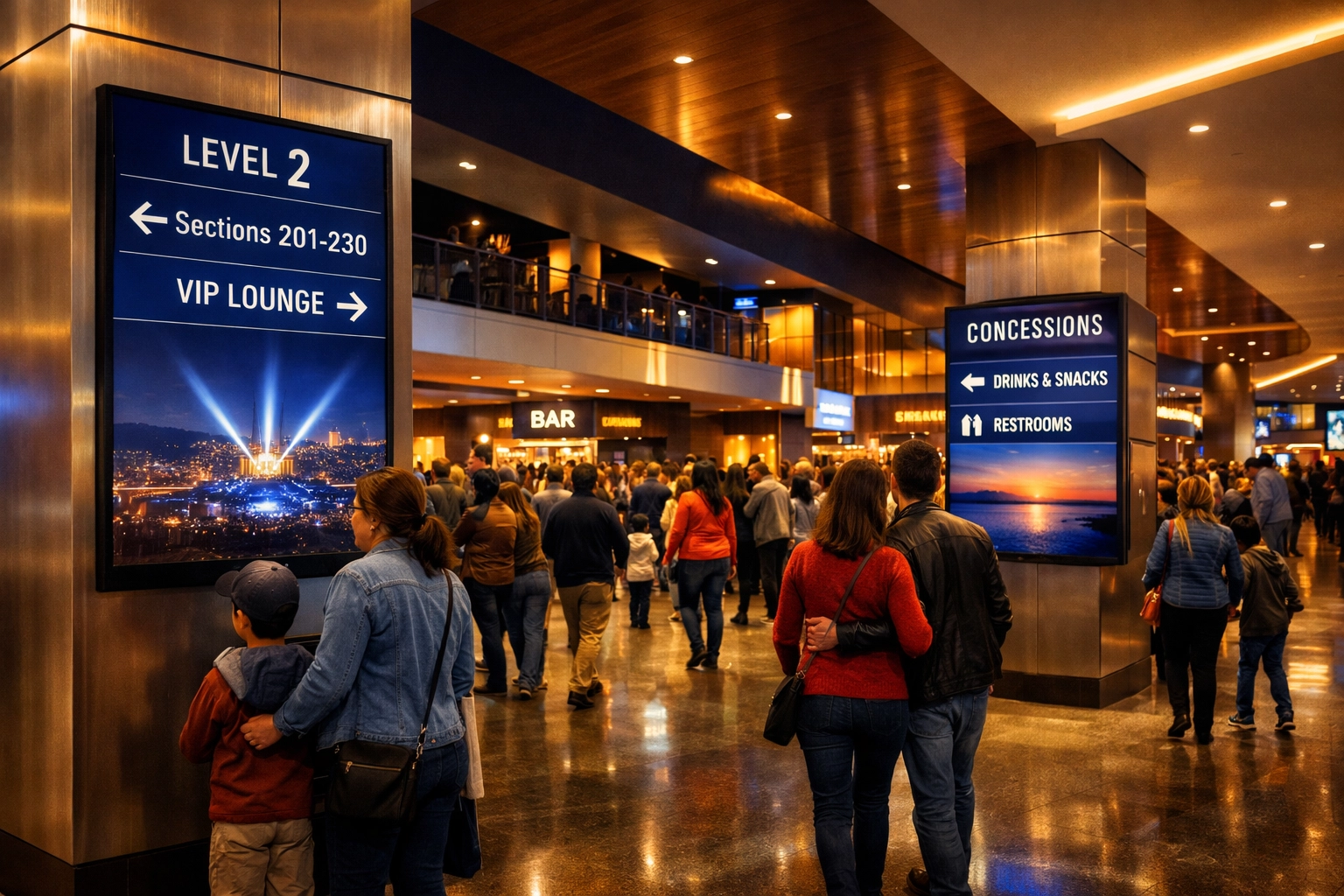
This means wayfinding systems that help visitors navigate complex venues while featuring location-based sponsor messaging. Digital displays that provide genuinely useful information (wait times, showtimes, facility locations) with integrated brand partnerships. Social media integration that amplifies the audience's own content creation while connecting sponsors to that authentic engagement.
Concert venues, theaters, museums, attractions, and festivals all operate in this space where experience quality directly impacts return visits and word-of-mouth marketing. Our framework ensures media monetization strengthens rather than undermines the core experience.
Organizations implementing these strategies consistently see improved visitor satisfaction scores alongside increased revenue. That's not a tradeoff, it's proof the approach works.
Transportation Networks: Infrastructure as Media Inventory
Transportation hubs process millions of travelers who are actively seeking information. They're checking schedules, looking for directions, planning connections, and filling wait time. This creates ideal conditions for valuable media integration.
The framework treats transportation infrastructure as premium media inventory that serves travelers while generating significant revenue. Digital displays provide real-time transit information, weather updates, local area guides, and emergency notifications, establishing trust and attention. Once that attention exists, integrated advertising and sponsorships become valuable rather than intrusive.
Airports, train stations, bus terminals, and transit centers all represent high-traffic environments where thoughtful media strategy creates win-win scenarios. Travelers get genuinely useful information that improves their experience. Brands reach engaged audiences in receptive contexts. Transit authorities unlock substantial non-fare revenue streams.
The key is understanding how transportation audiences differ from entertainment or sports audiences, then adapting engagement strategies accordingly. Someone rushing to catch a flight has different information needs than someone settling in for a hockey game. The framework addresses these contextual differences while applying proven cross-sector principles.
Measurement and Optimization: From Installation to Intelligence
Media infrastructure is worthless if you can't measure its performance and optimize based on data. The framework includes comprehensive analytics that reveal audience behaviors, engagement patterns, content performance, and partnership ROI.
This transforms media from a "set it and forget it" installation into an intelligent system that continuously improves. Organizations learn which content drives engagement at different times and locations. They understand audience demographics and behaviors at granular levels. They demonstrate concrete ROI to sponsors and partners rather than relying on estimates and assumptions.
This data advantage compounds over time. Year one provides baseline insights. Year two enables optimization based on proven patterns. Year three allows predictive modeling that anticipates opportunities before competitors recognize them. Organizations that embrace measurement and optimization pull further ahead while competitors remain stuck with static systems.
The framework also reduces operational costs. Centralized digital systems eliminate the labor and materials required for manual signage changes. Content updates happen instantly across entire networks. Seasonal campaigns deploy with clicks rather than printing and installation crews.
Real-World Applications and Results
Organizations across sectors are implementing the multi-sector framework with measurable results:
A regional sports venue redesigned its entire digital ecosystem using cross-sector principles, resulting in a 67% increase in sponsorship revenue and improved fan satisfaction scores. Key sponsors reported significantly higher brand recall and purchase intent compared to previous traditional signage.
An entertainment complex applied transportation-sector wayfinding strategies combined with sports-venue activation methods, cutting visitor confusion complaints by 83% while adding six new premium partnerships that enhance rather than interrupt the guest experience.
A transportation authority implemented entertainment-sector content strategies alongside sports-venue monetization frameworks, generating enough non-fare revenue to offset 22% of operational costs while improving traveler satisfaction ratings.
These aren't isolated success stories. They represent predictable outcomes when organizations apply cross-sector thinking to media strategy.

Moving Forward: From Theory to Implementation
Understanding the multi-sector framework is step one. Implementation is where organizations either capture the opportunity or remain stuck with outdated approaches.
Successful implementation requires three elements: expertise that genuinely spans multiple sectors (not consultants who claim it), willingness to challenge industry-standard practices, and commitment to measurement-driven optimization over time.
The framework isn't a one-size-fits-all template. It's a methodology for identifying opportunities specific to your organization, audience, and competitive environment. A hockey arena in Colorado has different opportunities than a theme park in Florida or a transit system in Texas. The principles remain consistent, but applications vary based on context.
Organizations ready to move beyond single-industry thinking and implement proven multi-sector strategies consistently outperform competitors still trapped in traditional approaches. The question isn't whether cross-sector media frameworks work. The results prove they do. The question is whether your organization will implement them before or after your competitors.
Ready to transform your organization's media strategy with proven multi-sector expertise? Dakdan Worldwide brings real-world experience across sports, entertainment, and transportation industries to unlock revenue opportunities and enhance audience experiences. Contact Dan Kost directly at info@dakdan.com or call +1 (970) 578-4652 to discuss how the multi-sector framework applies to your specific situation. Learn more about our approach at dakdan.com or explore our portfolio at press.dakdan.com.
Connect with us: LinkedIn | Twitter | Instagram | Facebook
Dakdan Worldwide | Colorado, USA | Strategic Media & Consulting Solutions