
Live event production in sports and entertainment isn't just about showing up with cameras and hoping for the best. It's a strategic operation that requires meticulous planning, the right team, cutting-edge technology, and flawless execution. Whether you're producing a championship game, a concert, or a corporate event, success comes down to mastering each phase of the production process.
At Dakdan Worldwide, we've seen firsthand how proper live event production transforms ordinary broadcasts into unforgettable experiences that engage audiences and deliver measurable results for brands and organizations. This guide breaks down everything you need to know to execute productions that exceed expectations.
Phase 1: Discovery, Planning, and Venue Assessment
Every successful production starts with thorough preparation. Before your team touches a single piece of equipment, you need to establish clear objectives and understand your environment.
Define Your Goals and Audience
Start by identifying what success looks like. Are you maximizing viewer engagement? Driving sponsor visibility? Creating shareable content for post-event marketing? Your production strategy should align directly with your marketing goals, audience expectations, and brand standards. This clarity translates your vision into concrete production requirements that guide every decision moving forward.
Scout and Assess Your Venue
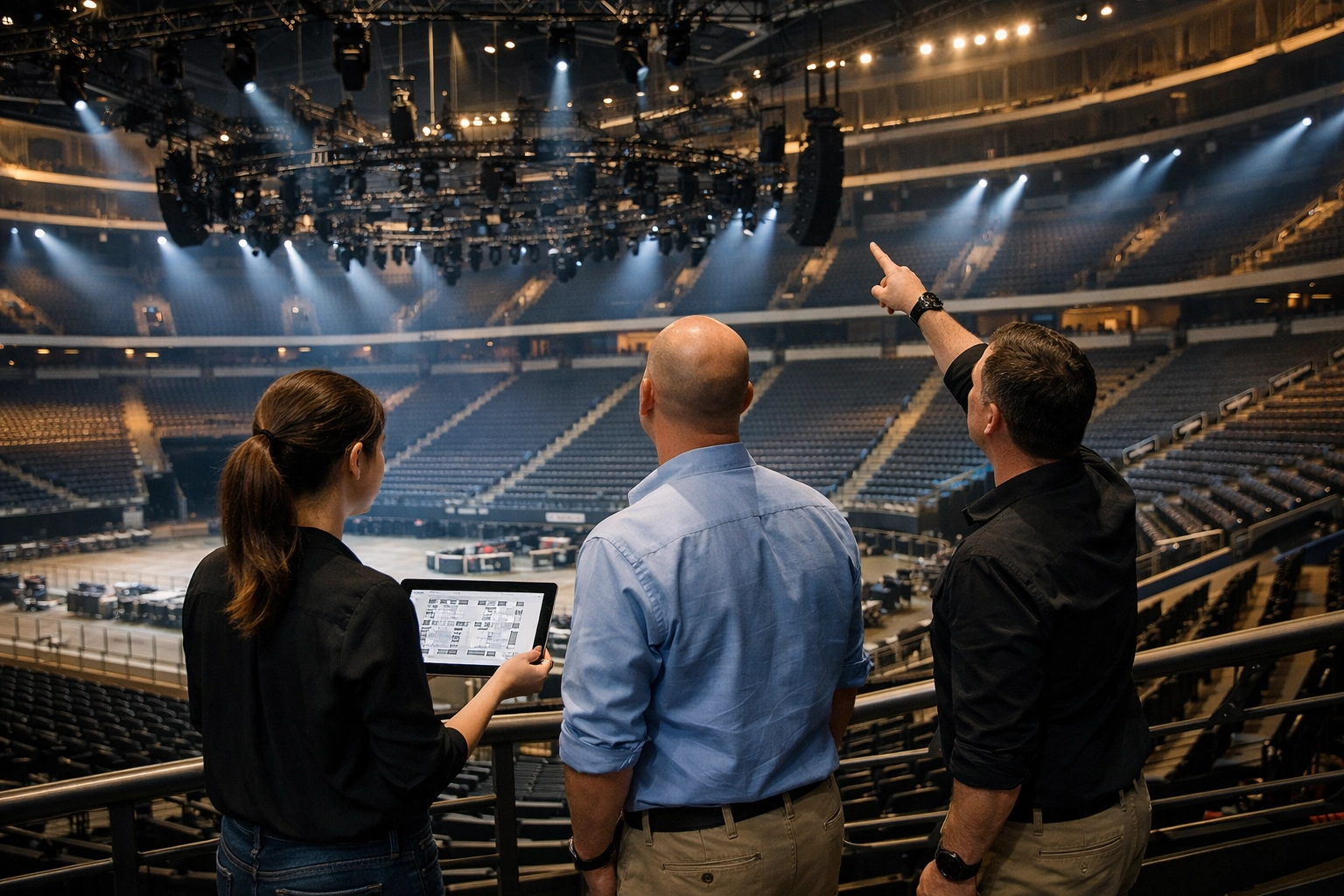
Venue assessment is critical. Walk through the space and evaluate the layout, lighting conditions, acoustics, and technical infrastructure. These factors directly inform your equipment choices and production strategy. A basketball arena presents completely different challenges than an outdoor concert venue or a conference hall.
Pay attention to power availability, internet connectivity, rigging points for cameras and lighting, and acoustic challenges. Understanding these elements early prevents costly surprises during setup.
Build a Detailed Production Schedule
Create a comprehensive run of show that includes call times, equipment setup windows, rehearsal schedules, show execution timelines, and teardown procedures. Coordinate directly with sports teams, event organizers, venue staff, and officials. Clear communication at this stage prevents confusion when you're running against the clock on event day.
Phase 2: Assemble Your Production Dream Team
Your team makes or breaks your production. Even the best equipment won't save a poorly coordinated crew, but skilled professionals can overcome technical challenges and deliver exceptional results under pressure.
Essential Production Roles
A complete live production team typically includes:
- Director: Oversees the entire production, calls shots, and ensures all technical elements synchronize perfectly
- Producer: Coordinates with organizers, manages schedules, budgets, and serves as the primary point of contact
- Camera Operators: Capture live action from strategic angles, tracking fast-paced movement while maintaining composition
- Audio Engineers: Handle sound mixing, recording, and manage audio levels to deliver clear, balanced sound
- Graphics Operators: Create and integrate professional graphics, lower thirds, stats, and visual overlays
- Replay Operators: Manage instant replay systems and slow-motion footage for analysis and highlights
Hiring and Training for Excellence
When building your team, prioritize experience, technical skillset, and professionalism. Live event production demands people who perform under pressure while maintaining quality standards. Assess candidates' ability to problem-solve quickly and work collaboratively in high-stress environments.
Once assembled, invest in comprehensive training. Familiarize your team with the specific equipment they'll be using, conduct technical rehearsals, and run through the complete production schedule. The more prepared your team is, the smoother your execution will be.
Phase 3: Select Equipment and Technology That Delivers
Technology choices directly impact production quality and operational efficiency. Your equipment package should match your production goals, venue requirements, and budget while building in redundancy for risk mitigation.
Video Capture and Switching Systems
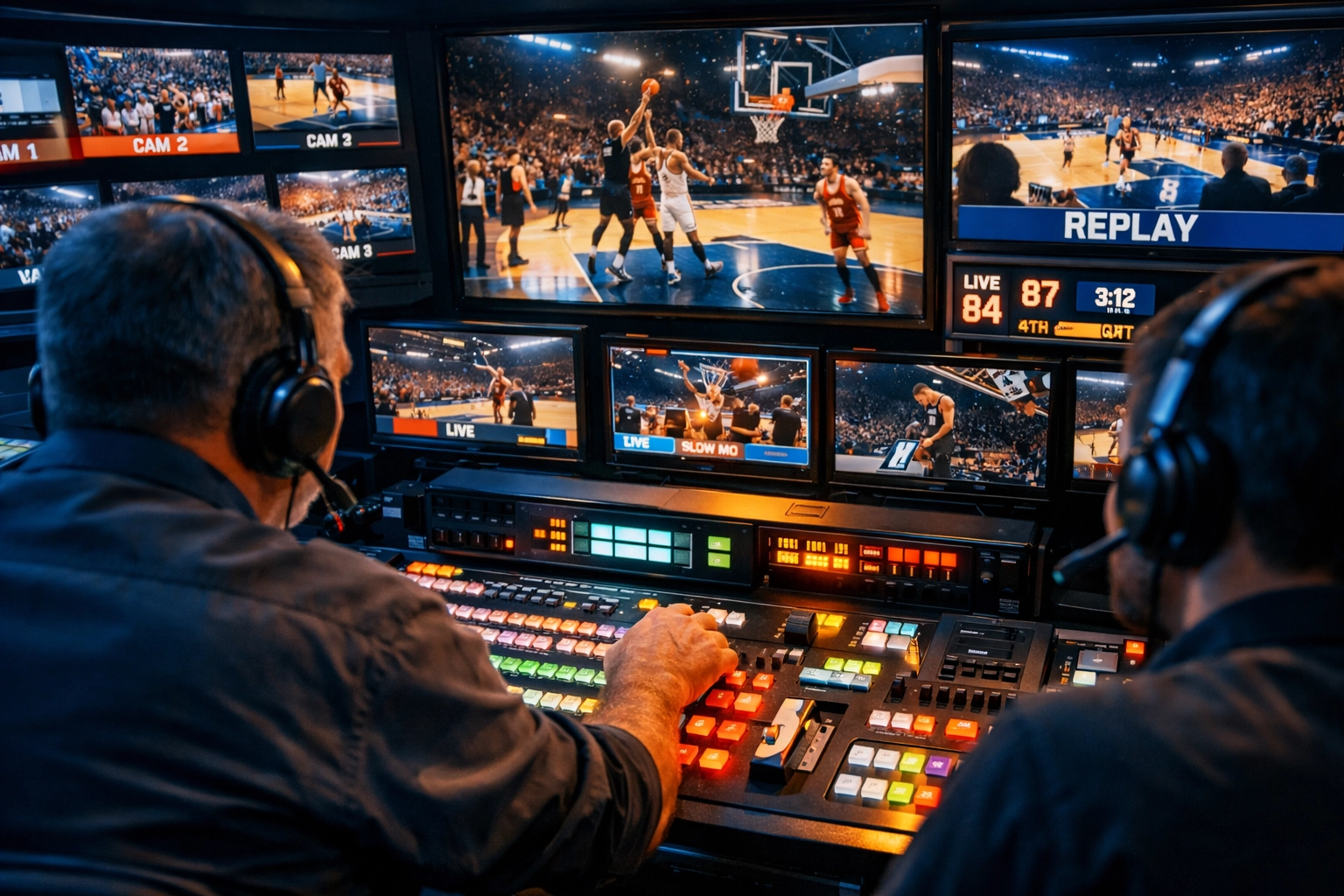
Select high-quality HD or 4K cameras capable of capturing both fast-paced action and subtle reactions. Sports production typically requires cameras with excellent low-light performance and fast autofocus systems. Use a professional video switcher to seamlessly transition between multiple camera angles, graphics, and video sources.
Modern productions often incorporate 5-8 cameras for comprehensive coverage, including wide shots, tight action, reaction angles, and specialty positions like aerial or rail-mounted cameras.
Audio Excellence
Quality sound is non-negotiable for sports and entertainment broadcasts. Choose audio equipment that handles high ambient noise levels typical at live events while delivering crisp, clear commentary and natural crowd atmosphere. Your audio package should include wireless microphones, mixing consoles, and monitoring systems that allow real-time adjustments.
Lighting and Display Technology
Lighting significantly impacts video clarity, color accuracy, and overall visual appeal. Work with venue lighting or supplement with portable lighting systems to ensure consistent, broadcast-quality illumination. Use projectors and LED walls to display your live feed to in-venue audiences, creating an integrated experience between the live action and your production.
Replay Systems and Media Servers
Incorporate instant replay systems to analyze live action, create highlights, and showcase critical plays. Use a media server to store and manage video content, graphics packages, and pre-produced segments. Ensure you have a reliable video distribution system that feeds content to displays, streaming platforms, and recording devices simultaneously.
Phase 4: Create Immersive Viewer Experiences
Live production is about more than capturing what happens. It's about creating immersion, telling compelling stories, and delivering moments that resonate emotionally with your audience.
Advanced Camera Techniques
Use multiple angles and perspectives to give viewers access they couldn't get from a single vantage point. Incorporate close-ups that capture emotion, wide shots that provide context, and specialty angles that reveal unique perspectives. Strategic camera positioning transforms simple coverage into engaging storytelling.
Enhance Understanding Through Graphics
Professional graphics, overlays, statistics, and commentary help audiences understand what they're watching. Lower thirds identify participants, scoreboards track progression, and data visualizations provide context. These elements separate amateur productions from professional broadcasts.
Leverage Slow-Motion and Highlights
Slow-motion replays highlight key moments, showcase athletic performance, and create shareable content. Strategic use of replays enhances viewer understanding and creates memorable moments that extend your content's value beyond the live event.
Phase 5: Execute Flawlessly on Event Day
All your planning culminates in show-day execution. Success requires experienced crews, real-time coordination, and robust contingency planning.
Build in Redundancy
Deploy backup systems for critical equipment. This includes backup cameras, spare cables, redundant audio systems, and backup power sources. Equipment failures happen. Redundancy ensures they don't derail your production.
Establish Communication Protocols
Clear communication channels between all crew members are essential. Use headset communication systems that allow the director to coordinate camera operators, replay operators, and graphics teams in real-time. Establish protocols for calling shots, managing commercial breaks, and handling unexpected situations.
Prepare Contingency Plans
Develop alternative strategies for technical difficulties, equipment failures, weather challenges, and unexpected situations. Your team should know exactly what to do when problems arise. Quick decision-making under pressure separates good productions from great ones.
Post-Event Analysis and Content Extension
Your production's value doesn't end when the event concludes. Capture recordings, review performance metrics, and document lessons learned. This analysis improves future productions and creates opportunities for extended content distribution.
Highlight reels, social media clips, and recap videos extend your content's reach and provide ongoing value for sponsors and stakeholders. Every live event is also a content creation opportunity that feeds your broader marketing ecosystem.

Partner with Proven Expertise
Live event production demands experience, strategic thinking, and flawless execution. At Dakdan Worldwide, we bring comprehensive media production capabilities, consulting expertise, and industry connections that transform events into powerful brand experiences.
Whether you're planning your first live production or looking to elevate your existing capabilities, our team delivers solutions that meet objectives and create memorable experiences for your audiences. We understand the intersection of sports, entertainment, media, and brand partnerships because we operate at that intersection every day.
Ready to take your live event production to the next level? Let's create something extraordinary together.
Contact Dakdan Worldwide
📧 Email: info@dakdan.com
📞 Phone: +1 (970) 578-4652
🌐 Website: dakdan.com
📰 Press & Media: press.dakdan.com
Connect with us on social media and stay updated on the latest in sports and entertainment production solutions. Visit our contact page to discuss your next project or explore partnership opportunities.