
If you're managing marketing for multiple entertainment venues, you already know the challenge: how do you maintain brand consistency across stadiums, zoos, aquariums, and entertainment complexes while still connecting with each location's unique audience?
Digital signage marketing offers incredible opportunities for multi-location brands, but scaling it effectively requires more than just installing screens and hoping for the best. You need a strategic framework that balances centralized control with local relevance, all while maximizing ROI and keeping operations manageable.
After working with venues across sports, entertainment, and experiential destinations, we've identified five essential steps that turn digital signage from a logistical headache into a powerful, scalable marketing asset.
Step 1: Evaluate Each Location's Unique Needs
Before you roll out digital signage across your entire venue network, take time to understand what makes each location different. This isn't about reinventing the wheel at every site, it's about identifying the variables that will impact performance and engagement.
Start with detailed site surveys. Walk through each stadium, zoo, or entertainment venue and map out traffic patterns. Where do visitors naturally congregate? Which pathways see the heaviest foot traffic? What are the natural sightlines in each space?
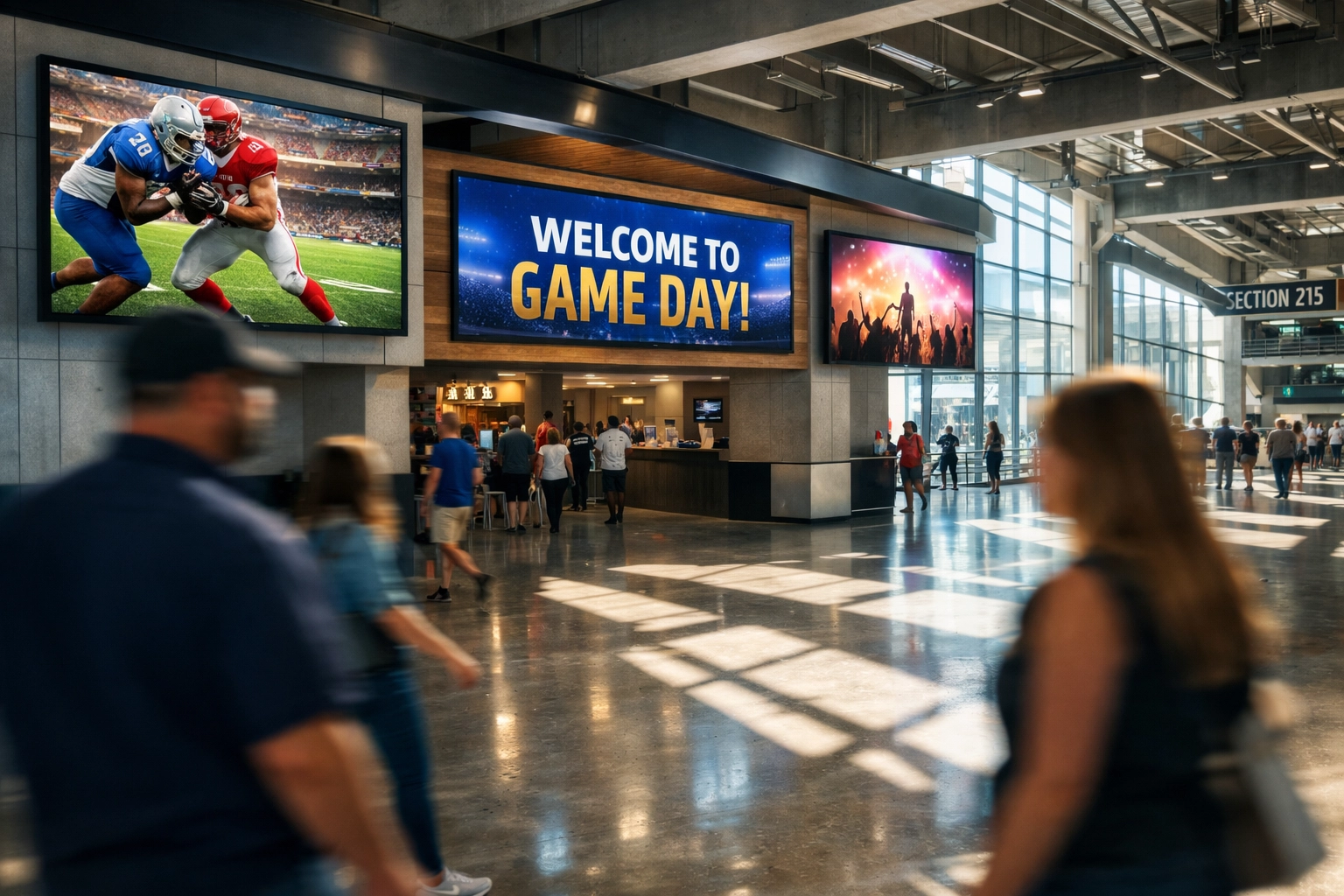
Environmental factors matter more than you might think. A digital display that works perfectly in a climate-controlled stadium concourse might struggle in an outdoor zoo environment. Consider ambient lighting conditions, weather exposure, viewing distances, and even seasonal variations in attendance patterns.
Audience demographics shift from location to location too. A family entertainment center attracts different visitors than a professional sports stadium. A zoo in Colorado serves a different demographic mix than an aquarium on the coast. Understanding these nuances helps you tailor content strategy while maintaining overall brand cohesion.
Don't forget the regulatory landscape. Zoning laws, permit requirements, and venue-specific regulations vary significantly by jurisdiction and facility type. Getting ahead of these compliance requirements early prevents costly delays and redesigns down the road.
Step 2: Establish Centralized Content Management
Here's where the magic happens. A cloud-based digital signage platform transforms how you manage content across multiple locations. Instead of manually updating screens at dozens of venues, you control everything from a single dashboard.
This centralized approach delivers several critical advantages. First, it eliminates manual errors. When you're updating promotions, schedules, or brand messaging, you make the change once and it propagates across your entire network. Second, it ensures promotional campaigns launch simultaneously. Want to announce a new partnership or promotion at 9:00 AM across all your venues? Done.
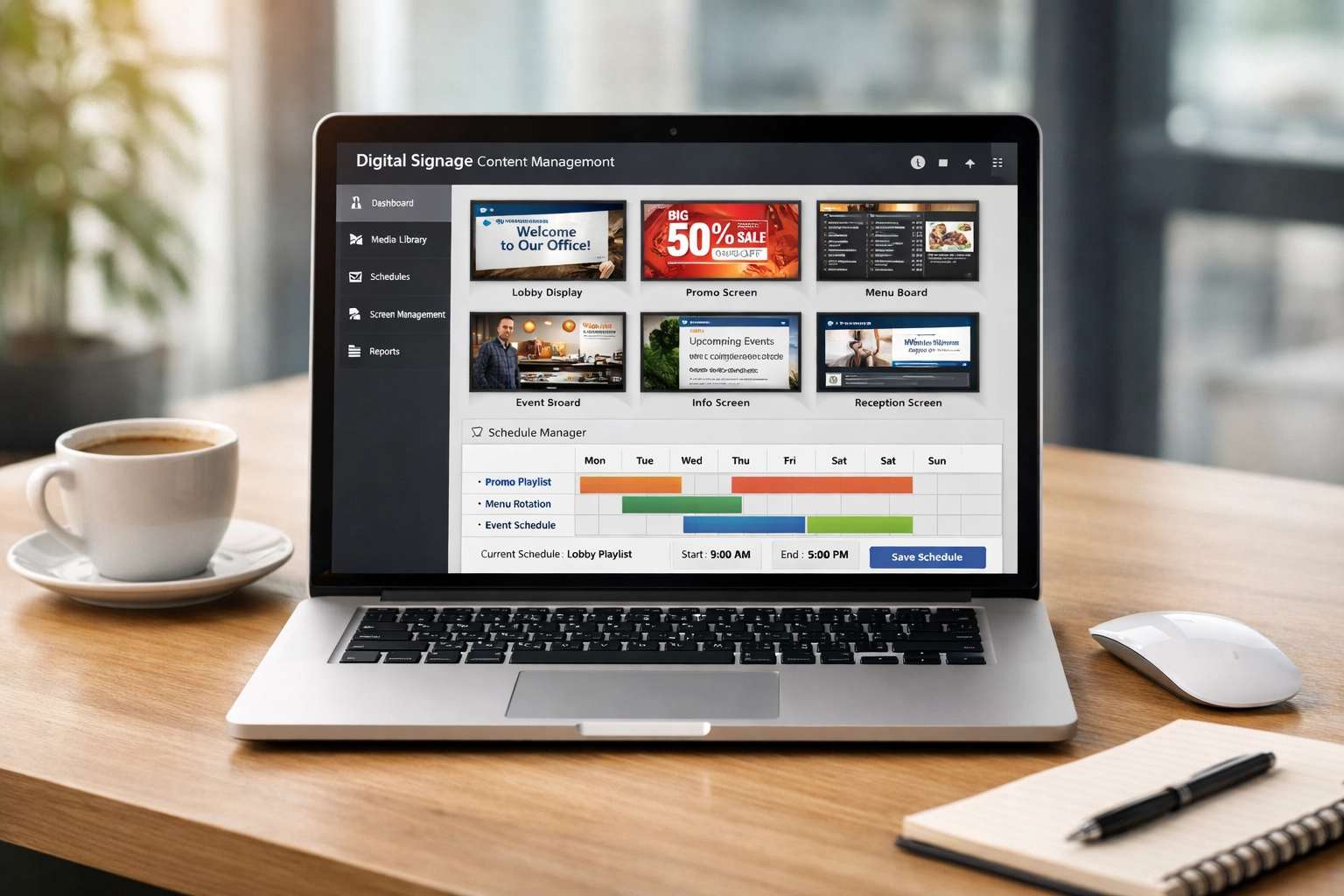
Real-time control becomes especially valuable during time-sensitive situations. If weather forces a schedule change at your stadium, you update digital signage instantly. If a special guest appears at your zoo, you can promote it across screens within minutes.
Large enterprises using multi-location digital signage report that approximately 70% schedule content centrally while still allowing for local adaptations. This balance between centralized control and local flexibility is the sweet spot for scalability.
Cloud-based platforms also make collaboration easier across your organization. Marketing teams can prepare content in advance, operations teams can manage schedules, and venue managers can request local adjustments, all within the same system. Version control and approval workflows prevent unauthorized changes while keeping content fresh and relevant.
Step 3: Balance Brand Consistency With Local Relevance
This step separates good multi-location digital signage from great multi-location digital signage. Your brand standards should remain rock-solid, but the content itself needs room to breathe and adapt to local contexts.
Template-based design systems are your best friend here. Create standardized templates that lock in your brand colors, logos, typography, and overall visual identity. Then build in customizable fields for location-specific information: event schedules, local partnerships, regional promotions, and community connections.
For example, your stadium network might use identical brand templates, but each location showcases its own game schedule, local sponsors, and region-specific concession promotions. Your zoo network maintains consistent branding while highlighting each facility's unique animals, exhibits, and seasonal events.
This approach delivers the best of both worlds. Brand teams maintain control over visual identity and core messaging. Local teams gain flexibility to connect with their specific audiences. And you avoid the chaos of completely custom designs at every location, which becomes impossible to manage at scale.
Cultural relevance matters too. A venue in Denver might reference local sports teams, landmarks, or community events that would mean nothing to audiences in Miami or Seattle. Digital signage that feels locally relevant drives higher engagement than generic content, even when it follows the same brand guidelines.
Step 4: Streamline Production and Implementation
Scaling digital signage across multiple venues requires operational discipline. The key is creating repeatable processes that maintain quality while reducing complexity.
Start with phased rollouts rather than simultaneous installation across all venues. Choose one or two pilot locations that represent different venue types or operational challenges. Test your content strategy, gather performance data, and refine your approach before expanding to additional sites.

This staged approach offers several benefits. You identify technical issues early when they're easier and less expensive to fix. You validate content strategies with real audience data before committing resources across your entire network. And you build internal expertise and best practices that accelerate subsequent rollouts.
Standardize your hardware specifications where possible. Using consistent display models, mounting systems, and media players simplifies training, reduces spare parts inventory, and streamlines troubleshooting. When something goes wrong at a venue, your team already knows how to fix it because they've worked with identical equipment elsewhere.
Choose materials and components designed for high-traffic environments. Entertainment venues put unique stress on equipment through constant operation, environmental exposure, and occasional physical impacts. Commercial-grade displays cost more upfront but deliver better long-term ROI through reliability and longevity.
Document everything. Create installation guides, content creation templates, troubleshooting procedures, and maintenance schedules. As your digital signage network grows, this documentation becomes invaluable for onboarding new team members and maintaining consistency across locations.
Step 5: Leverage Analytics and Stay Compliant
Digital signage platforms generate valuable data that helps you optimize performance and prove ROI. But you need to actively use that data, not just collect it.
Built-in analytics tools track which content drives the most engagement, how long visitors spend viewing different screens, and which calls-to-action generate responses. Heatmaps reveal which display areas grab the most attention, helping you optimize screen placement and content layout.
A/B testing takes this further. Experiment with different visuals, messaging, and calls-to-action to identify what resonates with your audience. Run the same promotion with two different creative approaches and measure which performs better. Use those insights to refine your content strategy across all locations.
Track operational metrics too. Monitor display uptime, content update success rates, and technical issues across your network. This data helps you identify problematic locations, equipment that needs replacement, and opportunities to improve operational efficiency.
Compliance remains critical as you scale. Ensure all signage meets ADA accessibility requirements, follows local zoning laws, and adheres to venue-specific regulations. Digital platforms make compliance easier by allowing centralized audits across all locations. You can quickly identify outdated information, inconsistent branding, or content that needs updating for regulatory reasons.
Turning Digital Signage Into a Scalable Marketing Asset
Scaling digital signage across stadiums, zoos, and entertainment venues doesn't have to be overwhelming. With the right framework, it becomes a powerful tool for building brand consistency, driving revenue, and creating better visitor experiences.
The key is balancing centralized control with local flexibility. Cloud-based platforms give you the infrastructure for efficient management at scale. Template-based design systems maintain brand standards while allowing relevant customization. Phased rollouts reduce risk and build expertise. And analytics turn your digital signage network into a continuously improving marketing asset.
At Dakdan Worldwide, we help brands across sports, entertainment, and experiential venues develop digital signage strategies that actually scale. Whether you're managing stadiums, zoos, aquariums, or entertainment complexes, we provide the consulting and media solutions that turn ambitious multi-location plans into operational reality.
Ready to scale your digital signage marketing across multiple venues? Let's talk about building a strategy that works for your brand, your budget, and your unique operational challenges.
Contact Dan Kost
Email: Dan@dakdan.com
Phone: +1 (970) 578-4652
Website: dakdan.com
Press Room: press.dakdan.com
Connect with us on social media for more insights on multi-location marketing, digital signage strategies, and venue optimization solutions.