
FOR IMMEDIATE RELEASE
Colorado, USA – Modern brand partnerships require more than traditional collaboration models. Today's most successful partnerships draw innovation from unexpected places, combining insights from sports media, entertainment venues, esports facilities, transportation hubs, and experiential destinations to create breakthrough engagement strategies.
Cross-industry innovation transforms standard brand partnerships into dynamic, multi-dimensional relationships that deliver measurable results. By adopting proven strategies from diverse sectors, brands can unlock new revenue streams, expand audience reach, and create partnerships that resonate across multiple consumer touchpoints.
1. Align Values and Demographics Through Strategic Audience Mapping
The foundation of any successful brand partnership starts with alignment. Rather than pursuing partnerships based solely on industry proximity or convenience, forward-thinking brands now use data-driven audience mapping to identify partners with genuinely complementary values and overlapping demographics.
This approach works across all sectors. A sports media network partnering with an entertainment venue can leverage shared audience psychographics, not just demographics. The key lies in understanding consumer behavior patterns that transcend individual industries.
Start by analyzing your current audience data through multiple lenses. What are their lifestyle preferences beyond your product category? Where do they spend their discretionary time and income? Social media insights, engagement analytics, and customer surveys reveal audience interests that extend far beyond your immediate industry.
When evaluating potential partners, look for brands that serve the same consumer at different life moments. A transportation advertising network might partner perfectly with an esports facility because both serve tech-savvy, mobile audiences who value connectivity and innovation. The alignment exists in shared values like innovation, accessibility, and forward-thinking approaches, rather than industry similarity.

2. Establish Clear, Measurable Objectives from Day One
Vague partnership goals create confusion and prevent meaningful evaluation. Successful cross-industry partnerships define specific, quantifiable objectives before launching any collaborative initiative.
Set partnership KPIs that matter to both organizations. Brand awareness metrics might include reach, impressions, and share of voice. Engagement objectives could track social media interactions, event attendance, or content consumption rates. Revenue goals should specify partnership-attributed sales, lead generation numbers, or customer acquisition costs.
Create a shared dashboard accessible to all partnership stakeholders. This transparency ensures both parties stay aligned on progress and can pivot strategies based on real-time performance data. Schedule regular check-ins, but make data accessible continuously so teams can respond to opportunities or challenges immediately.
Documentation matters significantly in cross-industry partnerships. When organizations from different sectors collaborate, they often use different terminology, success metrics, and reporting cadences. Establish a shared vocabulary and standardized reporting format at the partnership's outset to prevent miscommunication down the line.
3. Leverage Complementary Strengths Through Integrated Innovation
The most powerful partnerships combine each brand's unique capabilities to create something neither could achieve independently. This principle applies whether you're merging sports marketing expertise with entertainment production capabilities or combining transportation network reach with digital signage innovation.
Consider how technology integration creates new partnership opportunities. An esports pod installation in an educational setting demonstrates this perfectly. The hardware manufacturer brings technical expertise, the content provider supplies engaging programming, the educational institution offers access to student audiences, and the sponsoring brand gains authentic connection with a highly valuable demographic.
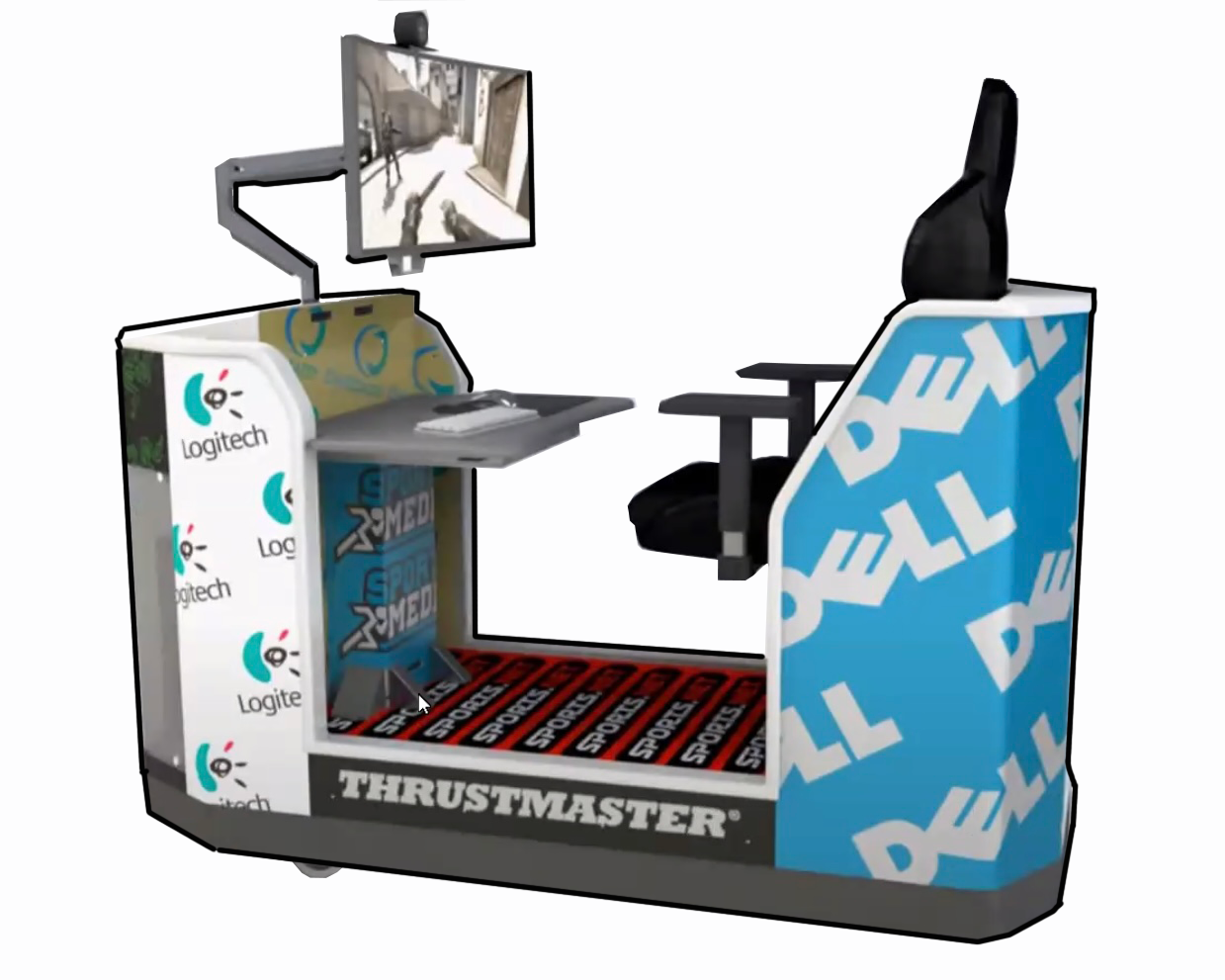
Co-creation initiatives generate the highest partnership value. Rather than simply co-marketing existing products, develop joint offerings that leverage both brands' strengths. This might mean creating exclusive content, designing limited-edition products, or building entirely new experiences that showcase complementary capabilities.
Resource sharing amplifies partnership effectiveness. Production facilities, distribution networks, technology platforms, and creative talent can all become shared partnership assets. A media holding company might offer production capabilities while a venue partner provides experiential space, and a technology partner supplies digital infrastructure. Together, they create integrated experiences impossible for any single organization to deliver alone.
4. Coordinate Multi-Channel Marketing Campaigns for Maximum Impact
Fragmented marketing efforts dilute partnership impact. Successful cross-industry collaborations require seamlessly integrated campaigns that present a unified message across every consumer touchpoint.
Design campaigns with multiple entry points that acknowledge different audience preferences. Some consumers discover partnerships through social media, others through physical signage at venues or transportation hubs, and still others through digital content platforms. Your integrated campaign should work cohesively regardless of where consumers first encounter it.
Cost efficiency improves dramatically when partners coordinate promotional spending. Joint advertising buys, shared production costs, and collaborative content creation reduce individual investment while increasing overall campaign reach. A transportation advertising network and entertainment venue partnership, for example, could coordinate billboard placement, digital displays, and venue signage to create consistent brand messaging throughout a consumer's daily journey.
Influencer partnerships amplify cross-industry collaborations effectively. Select influencers who authentically connect with both brands' audiences and can credibly discuss the partnership's unique value proposition. This works particularly well when partnerships span different sectors because it demonstrates genuine lifestyle integration rather than forced promotional content.

5. Monitor Performance and Optimize Through Data-Driven Iteration
Partnership success requires continuous evaluation and strategic adaptation. Implement robust tracking systems that measure performance against your established KPIs while remaining flexible enough to capture unexpected opportunities or challenges.
Real-time analytics enable agile partnership management. When certain tactics outperform expectations, scale them quickly. When strategies underdeliver, pivot without hesitation. The ability to optimize campaigns in-flight separates successful partnerships from mediocre ones.
Qualitative feedback complements quantitative metrics. Regular partner communication surfaces insights that data alone might miss. What are teams on the ground observing? How are audiences responding in ways that metrics don't capture? What unexpected opportunities are emerging from the collaboration?
Document learnings systematically to inform future partnerships. Build an institutional knowledge base that captures what worked, what didn't, and why. This organizational learning compounds over time, making each successive partnership more effective than the last.
Taking Partnership Strategy to the Next Level
Cross-industry innovation in brand partnerships isn't just about thinking outside your category. It's about strategically combining complementary strengths, aligned audiences, and integrated execution to create partnerships that deliver measurable results exceeding what either brand could achieve independently.
The media landscape continues evolving rapidly. Organizations that master cross-industry partnership strategies position themselves to capitalize on emerging opportunities across sports, entertainment, esports, transportation, and experiential venues. Success requires strategic thinking, clear objectives, integrated execution, and continuous optimization.
Ready to transform your brand partnership strategy? Dakdan Worldwide specializes in creating innovative, cross-industry partnerships that deliver measurable results across sports media, entertainment, esports, and beyond.
Contact Dan Kost today to explore partnership opportunities:
- Email: Dan@dakdan.com | info@dakdan.com
- Phone: (970) 436-0580 | +1 (970) 578-4652
- Website: https://dakdan.com
Connect with us:
Learn more about our capabilities at https://dakdan.com/about or explore career opportunities at https://www.dakdan.com/career.
Discover our latest press releases and industry insights at https://press.dakdan.com.