
FOR IMMEDIATE RELEASE
COLORADO, USA – The sports advertising landscape is experiencing a fundamental shift. Automation technology is transforming how networks, agencies, and brands distribute news, announce partnerships, and maintain media relationships. As the industry moves toward agentic AI and automated workflows, understanding how to leverage automated press release distribution has become critical for staying competitive.
Why Automation Matters for Sports Advertising Networks
Traditional press release distribution involves manual outreach, individual journalist contacts, and time-consuming follow-ups. This approach doesn't scale in an industry where timing is everything. When a major sponsorship deal closes, a new venue partnership launches, or breaking news happens during live events, sports advertising networks need distribution systems that move at the speed of the game itself.
Automated press release distribution solves this challenge by combining technology with strategic targeting. Instead of choosing between speed and precision, modern platforms deliver both. Networks can reach thousands of relevant journalists, publications, and media outlets while maintaining the personalized approach that drives actual coverage.
Recent developments show where the industry is heading. NBCUniversal recently unveiled agentic AI technology designed to automate live sports advertising buying across streaming and linear TV. This represents a broader transformation in sports media, where software agents can plan, optimize, and activate campaigns with minimal human intervention. Press release distribution is following the same trajectory.

The Sports-Specific Distribution Advantage
Generic press release services cast wide nets, but sports advertising networks require specialized targeting. Several platforms have emerged specifically for the sports industry, each serving distinct niches:
SportsWire delivers news releases directly to reporters, columnists, syndicates, television programs, newspapers, and local media covering the sports industry. This focused approach ensures your message reaches decision-makers who actually cover sports advertising, sponsorships, and venue partnerships.
Outdoor Sportswire provides unlimited press release distribution to 6,000 outdoor sports reporters and industry insiders. For networks working with outdoor sports brands, adventure tourism, or related sponsorships, this targeted delivery creates meaningful connections with the right audience.
Endurance Sportswire offers unlimited distribution to 12,000 endurance sports reporters and industry insiders. Marathon sponsors, triathlon event promoters, and endurance sports advertisers benefit from this specialized network.
The common thread? Quality over quantity. Industry-specific wires connect you with journalists who actively cover your sector, increasing the likelihood of coverage and meaningful media relationships.
Building an Automated Distribution Strategy
Successful automation doesn't mean eliminating human judgment. The most effective strategies combine automated delivery with strategic planning. Here's how sports advertising networks can build systems that work:
Start with audience segmentation. Not every press release deserves the same distribution list. Major partnership announcements might warrant broad distribution across multiple platforms, while venue-specific news might perform better with targeted local and industry outlets. Automated systems can maintain multiple distribution lists, triggering the appropriate one based on content tags or categories.
Establish distribution tiers. Create priority levels for different announcement types. Tier 1 might include embargo-breaking news about major sponsorship deals, distributed widely across industry and mainstream media. Tier 2 could cover partnership renewals and campaign launches, focused on industry publications. Tier 3 might handle routine updates, distributed to specialized niche outlets.
Integrate with your existing workflow. The best automated systems connect with your content management, social media scheduling, and client reporting tools. When a press release goes out, automated systems can simultaneously update social channels, notify stakeholders, and track coverage metrics without manual intervention.
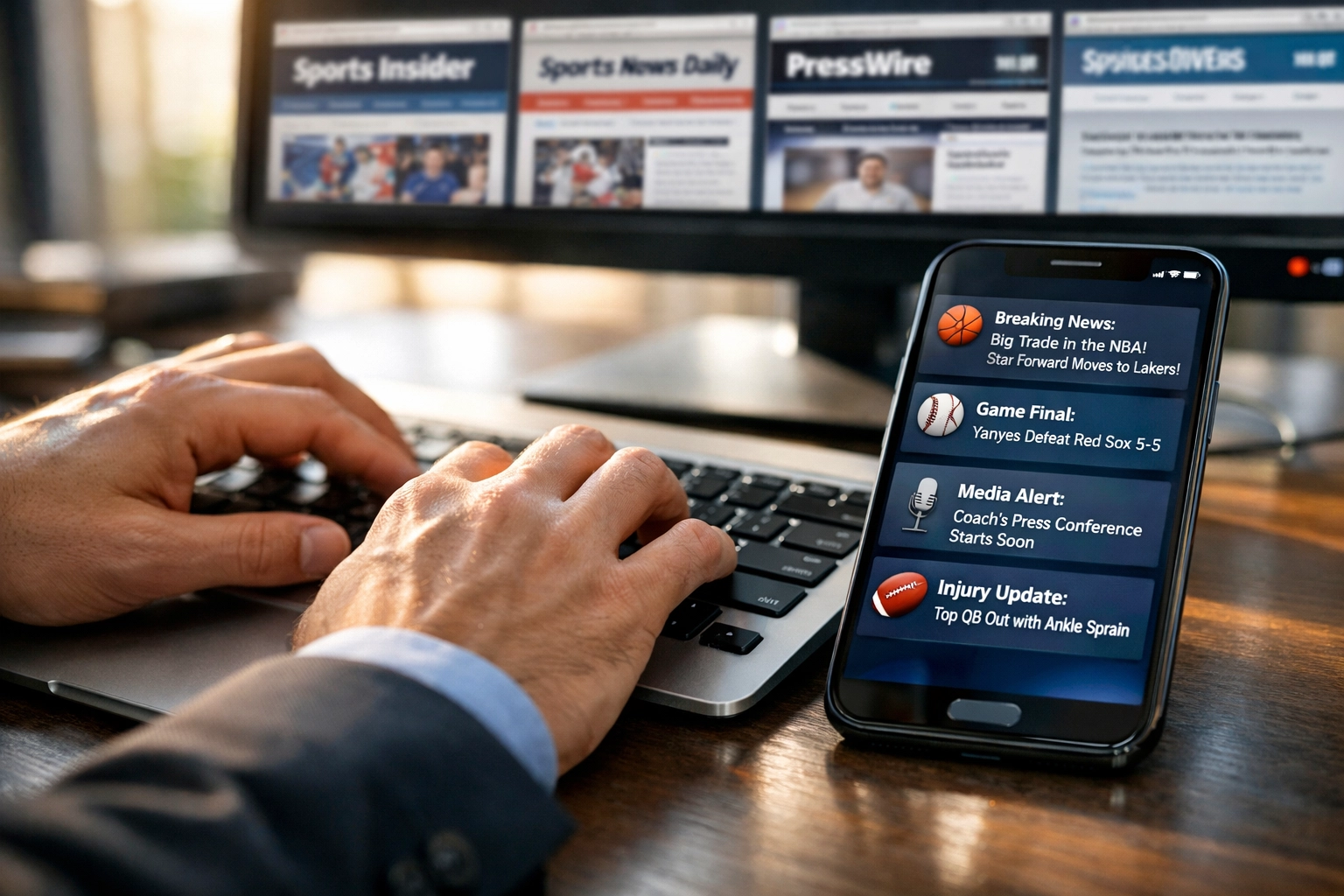
Technology That Powers Modern Distribution
Understanding the technology behind automated press release distribution helps networks make informed platform choices. Modern systems typically include:
API integrations that connect press release platforms with newsroom databases, journalist management systems, and media monitoring tools. These integrations enable real-time distribution updates and coverage tracking.
Machine learning algorithms that analyze which journalists cover specific topics, identify coverage patterns, and suggest optimal distribution times. Over time, these systems learn which outlets provide the best coverage for different announcement types.
Automated follow-up sequences that send reminder emails to journalists who opened but didn't cover initial releases. These sequences can be customized based on journalist behavior and preferences.
Multi-channel distribution that simultaneously delivers releases through email, newswire services, social media, and direct journalist portals. Unified dashboards show performance across all channels.
Measuring What Matters
Automation enables measurement at scale. Instead of manually tracking coverage, modern systems provide comprehensive analytics:
Distribution metrics show how many journalists received, opened, and clicked through your release. These numbers provide baseline engagement data.
Coverage metrics track which outlets published stories, the sentiment of coverage, and the reach of each placement. Automated media monitoring tools scan thousands of publications, identifying coverage that manual tracking would miss.
Attribution tracking connects press release distribution to website traffic, social engagement, and even partnership inquiries. When a major brand reaches out after seeing coverage generated by your press release, automated systems can trace that connection.
Competitive benchmarking compares your distribution performance against industry standards and competitor activity. This context helps networks understand whether their automation strategy is working.

Real-World Application for Sports Advertising Networks
Consider a sports advertising network managing multiple venue partnerships, brand sponsorships, and advertising campaigns. Without automation, announcing a new stadium naming rights deal might require:
- Manually compiling journalist lists
- Individually sending emails to dozens of contacts
- Following up with non-responders
- Tracking coverage across publications
- Reporting results to stakeholders
This process could consume days. Automated distribution completes the same work in hours:
- Pre-loaded journalist lists trigger based on content tags
- Scheduled distribution goes out at optimal times
- Automated follow-ups reach non-responders after 48 hours
- Media monitoring tools track coverage in real-time
- Stakeholder reports generate automatically with live metrics
The time saved scales dramatically as release volume increases. Networks distributing weekly announcements save hundreds of hours annually through automation.
The Human Element in Automated Systems
Automation handles distribution mechanics, but human expertise remains essential. The most successful sports advertising networks combine automated delivery with strategic communication planning:
Human strategists determine which announcements warrant press releases, craft compelling narratives, and identify unique angles that drive coverage. Automation can't replace the creative thinking that turns routine announcements into newsworthy stories.
Relationship managers maintain direct connections with key journalists, providing exclusive information and background context that automated systems can't deliver. These relationships complement automated distribution, creating a complete media strategy.
Content creators write releases that work within automated systems while maintaining quality and impact. Understanding how automation works helps writers optimize content for both algorithmic distribution and human readers.
Building Your Automated Distribution System
Sports advertising networks ready to implement automated press release distribution should follow a structured approach:
Audit your current process. Document how you currently distribute releases, identify bottlenecks, and measure time investment. This baseline helps evaluate automation ROI.
Research platform options. Compare industry-specific wires like SportsWire with broader platforms like PR Newswire. Consider hybrid approaches that combine specialized targeting with wide reach.
Start with pilot programs. Test automated distribution on lower-stakes announcements before deploying it for major news. This trial period reveals platform strengths and integration challenges.
Train your team. Ensure everyone understands how automated systems work, what they can and can't do, and how to maximize their effectiveness.
Monitor and optimize. Review performance metrics regularly, adjust distribution lists, and refine your approach based on results.
The Future of Press Release Distribution in Sports Advertising
Automation will continue evolving. Agentic AI, already transforming media buying, will likely extend to press release distribution. Future systems might:
- Automatically generate release drafts from structured data
- Predict which journalists will cover specific stories
- Personalize release content for different media outlets
- Optimize distribution timing based on newsroom schedules
- Connect press releases directly to live sports events and moments
Networks that build automated systems now will be positioned to adopt these advances as they emerge.
Ready to transform your press release distribution strategy? Dakdan Worldwide helps sports advertising networks implement automation technology that delivers results. From initial strategy development to platform selection and team training, we provide the expertise you need to succeed in an automated media landscape.
Contact us today:
Email: info@dakdan.com
Phone: +1 (970) 578-4652
Website: https://dakdan.com
Press Room: https://press.dakdan.com
Connect with us:
Learn more about our technology solutions: https://www.dakdan.com/teltrans
Explore career opportunities: https://www.dakdan.com/career
Contact our team: https://dakdan.com/contact
Media Contact:
Dan Kost
CEO, Dakdan Worldwide
Dan@dakdan.com
(970) 436-0580