
Brand partnerships have evolved far beyond simple logo placements and one-off sponsorship deals. Organizations operating across sports, entertainment, and media sectors need a systematic approach to building, scaling, and optimizing partnership portfolios that deliver measurable results for all parties involved.
The challenge isn't finding partnership opportunities. It's identifying the right partners, structuring mutually beneficial agreements, and creating frameworks that scale across multiple verticals without losing effectiveness. Here's the proven framework that transforms scattered partnership efforts into strategic growth engines.
Establishing Your Partnership Foundation
Before pursuing partnerships, your organization needs a solid foundation. This means having a proven value proposition, clearly defined target audiences, and demonstrable market traction. Partners invest resources in relationships that reduce their risk and accelerate their goals. Without these fundamentals, you're asking partners to gamble on unproven solutions.
Start by documenting your core strengths. What unique value do you bring to the table? In the sports and entertainment space, this might be access to specific demographics, technical capabilities in media production, proven event activation strategies, or innovative platforms that reach hard-to-access audiences.

For organizations working across multiple sectors, create segment-specific value propositions. Your pitch to an esports brand partner looks different from your approach to a traditional sports franchise or an entertainment property. Each partnership type requires tailored messaging that speaks directly to that sector's priorities and challenges.
The Partner Selection Matrix
Not every partnership opportunity deserves your attention. Strategic selection separates high-performing partnership programs from those that drain resources without delivering results.
Evaluate potential partners across three dimensions: audience alignment, complementary capabilities, and shared values. Audience alignment goes deeper than demographic overlap. You're looking for partners whose audiences have similar behavioral patterns, consumption habits, and brand affinities that suggest genuine synergy.
Complementary capabilities matter more than many organizations realize. The strongest partnerships bring together different strengths rather than duplicating existing capabilities. If you excel at digital activation and a potential partner dominates venue-based experiences, that complementary relationship creates more value than partnering with another digital specialist.
Brand values alignment protects long-term partnership health. Misaligned values create friction during execution and limit creative collaboration. Research potential partners' market positioning, communication style, and stakeholder relationships before initiating formal discussions.
Structuring Mutual Value and Clear Objectives
One-sided partnerships fail predictably. Sustainable partnerships distribute value across all participants while advancing each party's strategic objectives.
Define specific, measurable objectives for each partnership. Vague goals like "increase brand awareness" or "reach new audiences" provide no framework for decision-making or performance evaluation. Instead, establish concrete targets: acquire 500 qualified leads within the first quarter, increase engagement rates by 25% across co-branded content, or activate three new venue partnerships within six months.
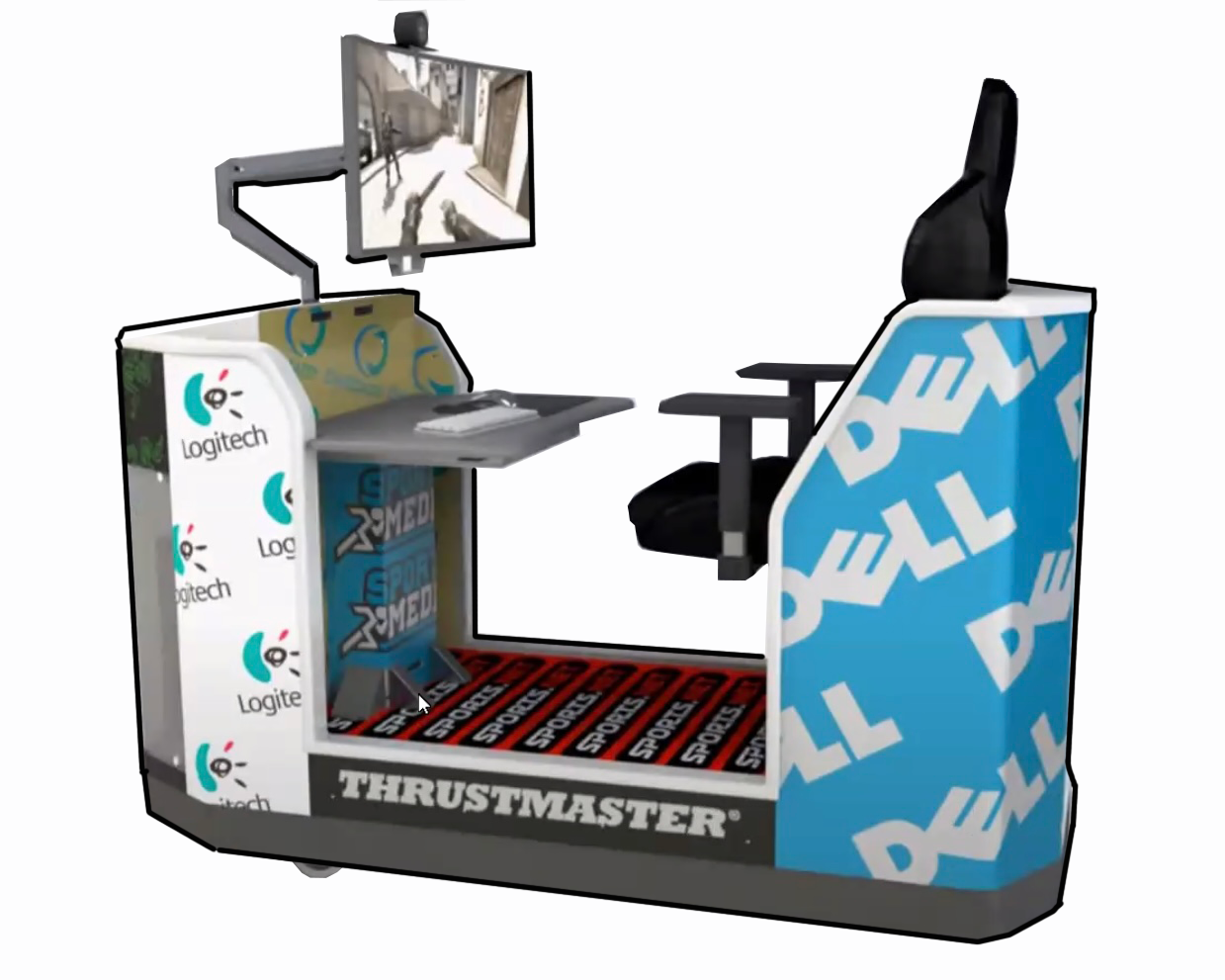
Consider how innovative platforms create partnership value in unexpected ways. Educational esports installations in high schools, for instance, offer sponsors direct access to student audiences while supporting STEM education initiatives. These multi-stakeholder partnerships deliver value to schools (educational resources), students (skill development), brands (targeted reach), and media companies (content opportunities and installation management).
Document each partner's specific contributions in measurable terms. This includes financial commitments, marketing channel activation, content creation responsibilities, venue access, audience data sharing, and technical resource allocation. Ambiguity in contribution expectations creates conflict during execution.
Building Accountability Systems
Clear accountability structures separate partnerships that deliver from those that stagnate. Assign primary contacts from each organization with actual decision-making authority. These individuals need budget approval capabilities, creative direction input, and conflict resolution power.

Create communication protocols that match partnership complexity. High-value, multi-channel partnerships might require weekly sync calls and real-time collaboration platforms. Simpler partnerships function effectively with monthly reviews and async updates. Right-sizing communication prevents both coordination failures and meeting fatigue.
Establish channel-specific responsibilities. Which partner activates which marketing channels? Who controls creative approval for co-branded content? Who manages venue coordination, event logistics, or media production? Overlap in responsibilities creates inefficiency. Gaps create dropped opportunities.
Performance Measurement and Adaptive Frameworks
Set measurable targets with baseline metrics, target outcomes, and specific timeframes. For example: increase joint social media reach from 50,000 to 200,000 followers within four months, or reduce customer acquisition cost through partner channels to 30% below direct channels within six months.
Build in early checkpoints. A 30-day performance review creates opportunities to identify and address issues before they compound. Establish clear triggers for strategy adjustment. If performance lags targets by more than 20% at the 30-day mark, conduct a comprehensive review within 48 hours and implement corrections.
Create flexibility mechanisms that allow partnerships to scale, pause, or pivot based on performance data. The best partnership agreements include expansion triggers when results exceed expectations and dignified exit provisions when partnerships underperform despite good-faith efforts.
Scaling Across Verticals
Scaling partnerships across sports, entertainment, and media sectors requires adaptable frameworks that maintain consistency while respecting sector-specific dynamics.
Develop playbooks that document successful partnership patterns. When a partnership model works in one vertical, abstract the core elements and test adaptation in adjacent sectors. A successful venue sponsorship model in traditional sports, for instance, might translate effectively to esports arenas or entertainment venues with minor modifications.

Create milestone frameworks that track partnership program maturation. Early-stage milestones focus on program documentation, initial partner recruitment, and proof-of-concept validation. Mid-stage milestones demonstrate that partner channels deliver lower customer acquisition costs than direct channels. Advanced milestones target specific revenue contributions from partnerships and documented success playbooks that enable rapid scaling.
Track ecosystem health metrics alongside partnership performance. Monitor active partner counts, engagement levels across the partner base, partner retention rates, and average time from partnership initiation to full activation. These metrics reveal program health and scaling capacity.
Implementation Strategy
Organizations building partnership programs across multiple verticals benefit from centralized strategy with decentralized execution. Develop core partnership principles, measurement frameworks, and documentation standards at the organizational level. Empower sector-specific teams to adapt these frameworks to their markets while maintaining consistency in partnership fundamentals.
Invest in partnership enablement resources. Create onboarding materials, creative assets, case studies, and activation guides that help partners succeed quickly. The faster partners achieve results, the more they'll invest in the relationship and become advocates for expansion.
Build feedback loops that capture insights from active partnerships and inform program evolution. Regular partner surveys, performance reviews, and cross-functional retrospectives identify improvement opportunities and emerging best practices.
Moving Forward
Strategic brand partnerships create competitive advantages that pure acquisition strategies cannot replicate. Organizations that approach partnerships with clear frameworks, measurable objectives, and adaptive systems build sustainable growth engines across sports, entertainment, and media sectors.
The framework isn't theoretical. It's proven across venue partnerships, educational installations, media collaborations, and multi-platform activations. Start with foundation building, move to strategic selection, implement clear accountability, and scale based on performance data.
Ready to build a partnership strategy that scales across your sports, entertainment, and media initiatives? Dakdan Worldwide specializes in developing and executing strategic partnerships that deliver measurable results for all stakeholders.
Contact Dakdan Worldwide
Website: dakdan.com
Email: info@dakdan.com
Phone: +1 (970) 578-4652
Explore our solutions: About Dakdan | Press Room | Contact Us | Careers
Connect with us on social media to stay updated on partnership opportunities, industry insights, and innovative solutions transforming sports, entertainment, and media partnerships.