
FOR IMMEDIATE RELEASE
Colorado, USA – Zoos and aquariums worldwide are transforming how they connect with visitors through innovative digital signage solutions. As guest expectations evolve and technology advances, facilities that embrace dynamic digital displays are seeing remarkable improvements in visitor engagement, education outcomes, and operational efficiency.
This comprehensive guide explores everything you need to know about implementing zoo media digital signage, from understanding the technology to maximizing its potential for your facility.
What Is Zoo Digital Signage?
Zoo digital signage refers to dynamic digital displays strategically placed throughout a facility to enhance visitor experiences, provide real-time information, and improve communication with guests and staff. Unlike traditional static signs, these systems offer flexibility, interactivity, and the ability to update content instantly.
Modern zoo digital signage encompasses everything from large outdoor LED displays showcasing animal facts to interactive touchscreens where visitors can explore conservation initiatives. The technology serves as a bridge between education and entertainment, creating memorable experiences that inspire guests to return and support wildlife preservation efforts.
Core Applications of Digital Signage in Zoo Environments
Animal Information and Species Education
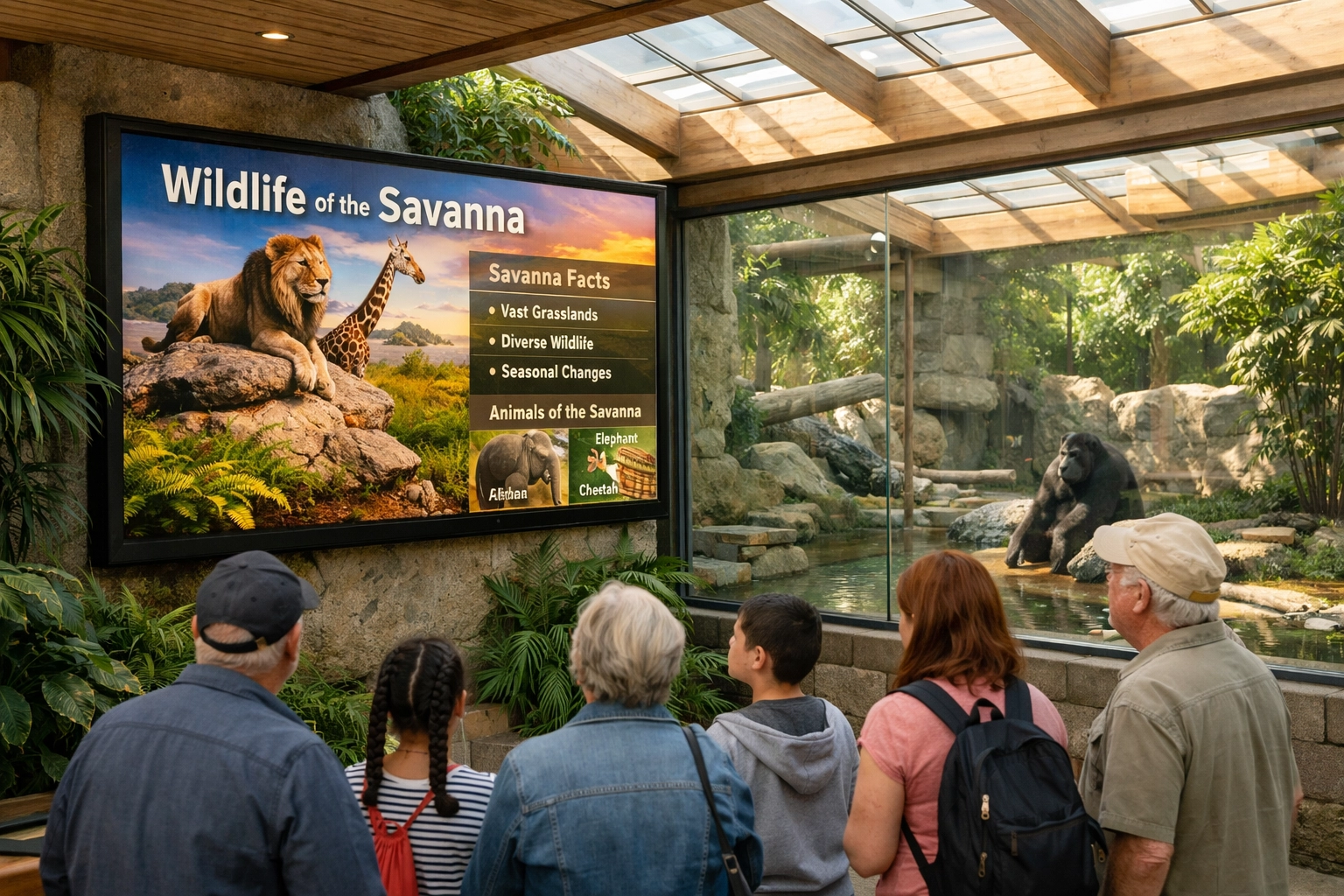
Digital displays positioned near exhibits deliver engaging content about the animals visitors are observing. These screens can showcase species details, natural habitat information, conservation status updates, and fascinating behavioral facts. Unlike printed placards that remain static, digital displays can rotate through multiple pieces of content, keeping the experience fresh for repeat visitors.
Wayfinding and Navigation Solutions
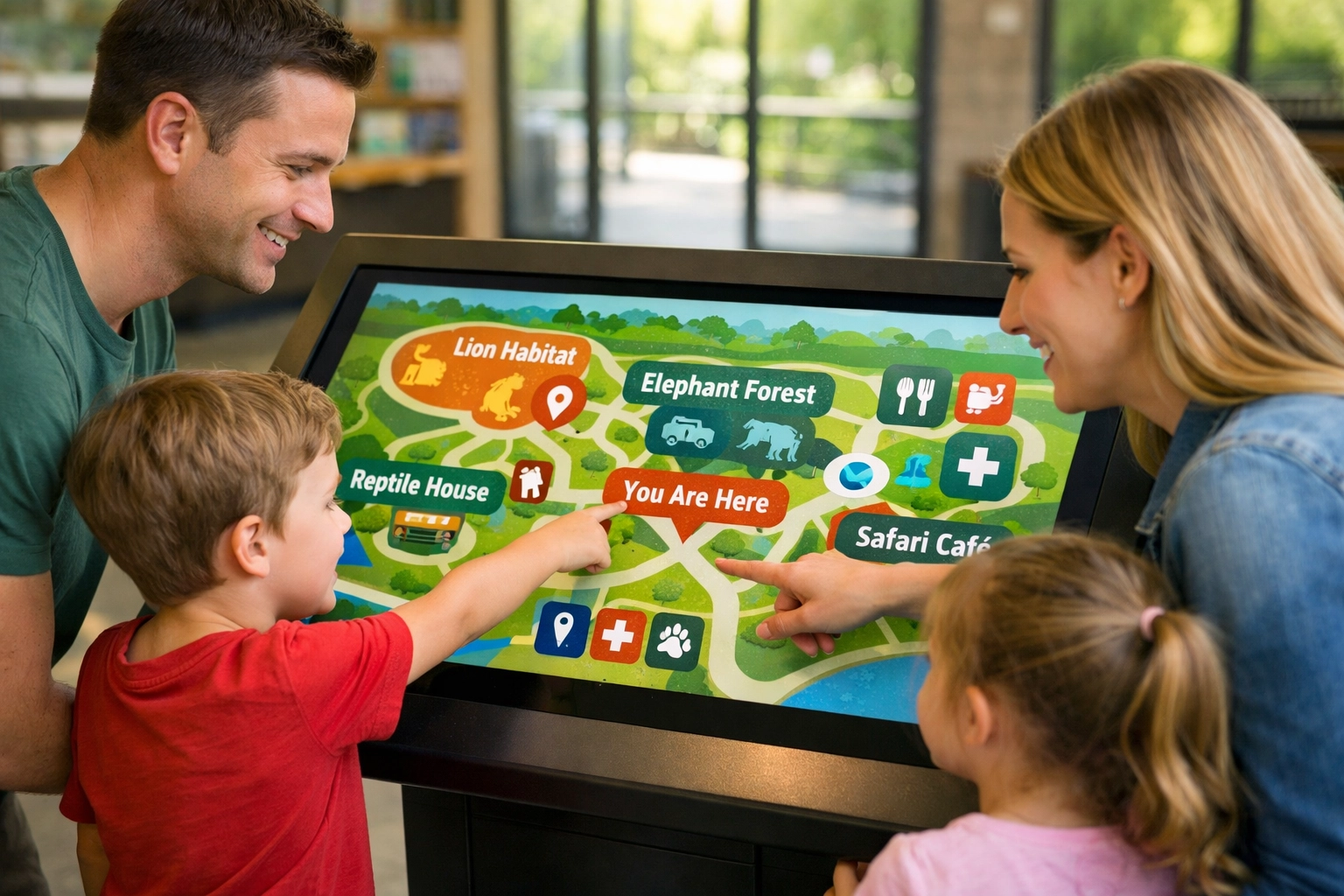
Large zoo campuses present navigation challenges for guests. Digital wayfinding systems provide interactive maps showing real-time directions to exhibits, restrooms, dining areas, gift shops, and special attractions. These systems can integrate with mobile applications to offer personalized navigation based on visitor preferences and accessibility needs.
Event Schedules and Real-Time Updates
Feeding demonstrations, keeper talks, and special shows are highlights of any zoo visit. Digital signage displays live schedules and can instantly update if timing changes occur due to weather or animal behavior. This real-time communication ensures visitors never miss the experiences they came to see.
Conservation Messaging and Awareness
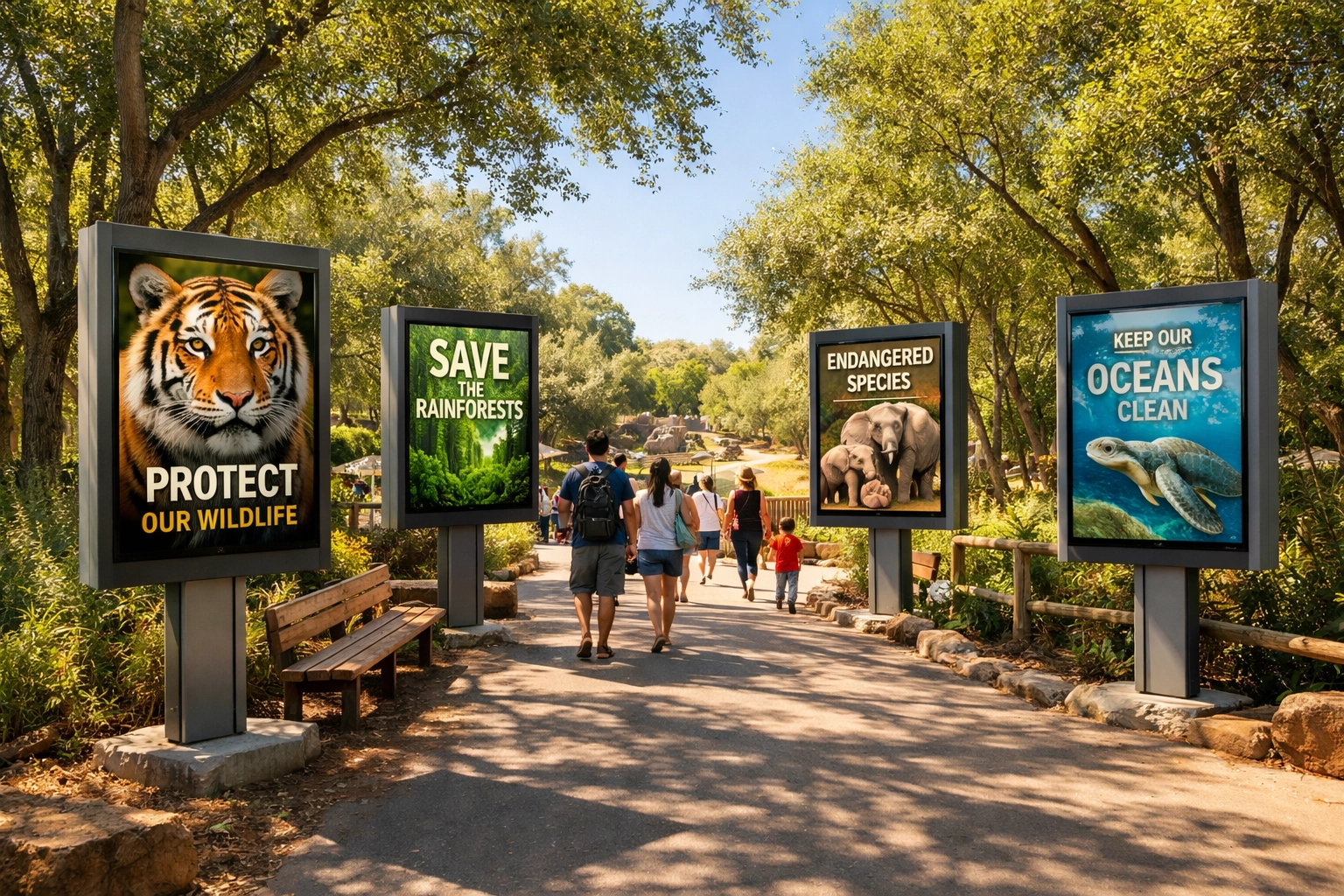
Zoos play a critical role in wildlife conservation, and digital signage provides powerful platforms for communicating these efforts. High-quality video content showcasing field research, breeding programs, and habitat restoration projects creates emotional connections that inspire visitor support and involvement.
The Technology Behind Effective Zoo Digital Signage
Content Management Systems
Zoo digital signage operates through content management systems (CMS) that allow staff to control what appears on screens throughout the facility. Cloud-based platforms enable remote updates from any computer, with changes deploying wirelessly to all connected displays within minutes. This flexibility proves invaluable when responding to unexpected situations or promoting time-sensitive opportunities.
Hardware Considerations
Display hardware must withstand the unique challenges of zoo environments. Indoor screens near humid tropical exhibits require different specifications than outdoor displays facing direct sunlight. High-brightness screens rated for outdoor use ensure visibility in various lighting conditions, while weather-resistant enclosures protect equipment from the elements.
Common hardware options include Android TV systems, dedicated media players, Chromeboxes, and Windows-based solutions. The right choice depends on content complexity, integration requirements, and budget considerations.
Network Infrastructure
Reliable connectivity forms the backbone of any digital signage deployment. Zoos must ensure robust WiFi or wired network coverage throughout their grounds, including remote exhibit areas. Redundant connections and offline playback capabilities ensure content continues displaying even during network interruptions.
Strategic Placement for Maximum Impact
High-Traffic Entry Points
Position prominent displays at entrance gates to welcome visitors and highlight featured exhibits, new arrivals, or special events. First impressions matter, and dynamic welcome content sets the tone for an engaging visit.
Exhibit Clusters and Rest Areas
Guests naturally pause at viewing areas and rest stops. These locations offer prime opportunities for educational content that enhances understanding of nearby animals. Benches equipped with nearby screens allow visitors to absorb information while taking breaks.
Food Service and Retail Locations
Digital menu boards in dining areas can promote sustainable food choices while reducing perceived wait times. Gift shop displays can showcase merchandise connections to conservation programs, turning purchases into meaningful contributions.

Staff Areas and Back-of-House
Digital signage supports internal operations by displaying work schedules, exhibit cleaning times, safety protocols, and operational updates in employee breakrooms and work areas. Effective internal communication directly impacts guest-facing service quality.
Interactive Engagement Opportunities
Touchscreen Experiences
Interactive kiosks invite visitors to explore content at their own pace. Touchscreen quizzes test animal knowledge, virtual tours preview upcoming exhibits, and donation interfaces make contributing to conservation programs simple and rewarding.
Mobile Integration
Advanced digital signage systems integrate with zoo mobile applications, creating seamless experiences across platforms. Visitors can scan QR codes on displays to save information for later, receive personalized recommendations based on their interests, or access content in their preferred language.
Gamification Elements
Digital displays can incorporate gamification to boost engagement, particularly with younger visitors. Scavenger hunts, achievement badges, and interactive challenges transform passive observation into active participation, increasing time spent in the facility and deepening educational impact.
Sponsorship and Revenue Opportunities
Zoo digital signage creates valuable advertising inventory that can offset implementation costs while providing sponsors with meaningful exposure. Conservation-minded brands often seek partnerships with zoos, and digital displays offer flexible, measurable advertising placements.
Rotating sponsor content between educational segments maintains visitor engagement while delivering value to partners. Digital systems also enable rapid creative changes, allowing sponsors to test different messages and optimize their campaigns.
Implementation Best Practices
Start with Clear Objectives
Define what success looks like before selecting technology. Whether the primary goal is improving wayfinding, increasing educational outcomes, or generating sponsorship revenue, clear objectives guide every subsequent decision.
Invest in Quality Content
Hardware is only as effective as the content it displays. Budget for professional content creation that matches the quality visitors expect from modern institutions. Poor graphics or outdated information undermine the entire investment.
Plan for Scalability
Begin with strategic placements that demonstrate value, then expand based on results. Cloud-based content management systems make adding new displays straightforward as budgets allow.
Train Staff Thoroughly
Ensure team members understand how to update content and troubleshoot common issues. Quick response to technical problems maintains the professional image digital signage is meant to enhance.
Partner with Experienced Media Professionals
Implementing effective zoo digital signage requires expertise spanning technology, content creation, and strategic planning. Working with experienced media partners ensures your investment delivers maximum return while avoiding common pitfalls.
Dakdan Worldwide brings comprehensive media consulting experience to zoo and aquarium digital signage projects. From initial planning through ongoing content management, our team helps facilities create engaging visitor experiences that support conservation missions and operational goals.
Media Contact:
Dan Kost
CEO, Dakdan Worldwide
Email: Dan@dakdan.com
Phone: (970) 436-0580
Learn More:
Visit https://dakdan.com to explore our media solutions
Contact us directly at https://dakdan.com/contact
Company Phone: +1 (970) 578-4652
Connect With Us:
Press Room: https://press.dakdan.com
About Dakdan Worldwide: https://dakdan.com/about
Dakdan Worldwide delivers strategic media, advertising, and entertainment solutions across sports, entertainment, and attraction industries.
#ZooDigitalSignage #VisitorEngagement #ZooTechnology #DigitalDisplays #WildlifeEducation #ConservationTech #AquariumMedia #AttractionMarketing #askdakdan #DakdanWorldwide